The numerousness of these social networking sites is driving me crazy. I have already started losing track of which all portals I am a member of. Here I try creating a list, with idea about which is for what.
My experience is that it's better to stick to few networks. We can't be active in many networks. It would soon go out of hand if we tried to be active in all in which are signed up.
Blogspot: I use this for blogging general stuff. I started blogging here. So, first mover advantage in my case. I don't have anything particularly good or bad to say about this site.
Sulekha: I use this for blogging creative stuff -- particularly short stories. This is fairly well-read ezine, and widely popular among Indians, world over. Its blogging interface is very sophisticated. Blogs can be put wide number of categories. So, searching for interesting blogs is easier, and so is reaching out to the pertinent audience to your own writing. There's a point system in place, which rates the blogger as per their activity. So, there's this lure of becoming famous.
Orkut: The first proper social networking site I became a member of. It's got the first mover advantage for me. I have over 200 contacts here as of now. I have got back in touch with many many old lost friends though orkut. And also have met people with matching interests (water colouring, cartooning etc.) Its scrapping feature looked crazy and silly in the beginning. But it later became the prime medium of reconnecting with old friends, as I would often bump into old friends while browsing someone's scrapbook.
LinkedIn: This is a very popular professional networking site. Its professional networking and referral system is its novel feature. I have heard that some companies officially demand referrals through LinkedIn.
Minglebox: This is a campus networking site. It's an Indian site. The number of colleges listed in this seems large, but the number of members in each doesn't seem to be too good. IISc has only a little over 20 members. That shows that it hasn't yet taken off. It has got a groovy online chatting facility with your campus mates.
Tagged , Frienster , namesdatabase : These are similar to orkut. Their UI is mostly more sophisticated than orkut's, but they have lost out to orkut on the first mover advantage. Haven't had a chance to explore the features to be able to give a detailed review.
Tuesday, July 03, 2007

Wednesday, June 27, 2007
Having Food
I thought let me grab the chance of giving you some advice. :)
If one does not enjoy good appetite, I
was wondering if there's a way out of that. Well, the problem may be
with some 'chemical locha' in the body or brain. In that case, I
don't know if what I say below would work or not. Here are two things
you can do:
1. Trying to reduce the number of people you eat with. I find the
company of zero or one people ideal during my meals. I like talking
little while eating; and if at all, I like talking on thing which are
peaceful and quiet. I don't like having any discussion that requires
surge of adrenalin or intellect or both. For example, Science,
music, philosophy, literature, art...anything that I am serious about
is a no-no during meals. The idea is to pay full attention to whatever
I eat and spend as little energy on talking
2. When I used to fuss about food in my kidhood, my Mom used to say,
"Chander moto mukh kore khao" (eat while having a face like moon.)
That has had deep effect on me since. I have made it a point to try
feeling happy about the food I am eating. Food hides good tastes
behind bad taste. I found that it was fun to look for what tasted good
in that food. If anyone in the world can enjoy a particular food, I
try finding out a way to relish that food in the same way. I often
succeed. :)
In short, we must give full attention to our food. We should eat it
with affection and joy. :)
May we all be blessed with good appetite and even better bowel movement! :D
Jaihind!
If one does not enjoy good appetite, I
was wondering if there's a way out of that. Well, the problem may be
with some 'chemical locha' in the body or brain. In that case, I
don't know if what I say below would work or not. Here are two things
you can do:
1. Trying to reduce the number of people you eat with. I find the
company of zero or one people ideal during my meals. I like talking
little while eating; and if at all, I like talking on thing which are
peaceful and quiet. I don't like having any discussion that requires
surge of adrenalin or intellect or both. For example, Science,
music, philosophy, literature, art...anything that I am serious about
is a no-no during meals. The idea is to pay full attention to whatever
I eat and spend as little energy on talking
2. When I used to fuss about food in my kidhood, my Mom used to say,
"Chander moto mukh kore khao" (eat while having a face like moon.)
That has had deep effect on me since. I have made it a point to try
feeling happy about the food I am eating. Food hides good tastes
behind bad taste. I found that it was fun to look for what tasted good
in that food. If anyone in the world can enjoy a particular food, I
try finding out a way to relish that food in the same way. I often
succeed. :)
In short, we must give full attention to our food. We should eat it
with affection and joy. :)
May we all be blessed with good appetite and even better bowel movement! :D
Jaihind!
Sunday, June 24, 2007
Excerpts from the early days of PhD
Follows excerpts from a letter I wrote sometime in the second year of my PhD. The mood is that of pride, exuberance, hope, and a lot of inexperience. I had no idea yet what lay ahead of/for me. A lot has changed since then. Much that's written here would never have been written later, if not then. But, that proves it: This PhD has been worth its while!
letter 1
W Bhaai, hum abhee bhee IISc mein hee hain. PhD kar rahe. Aur kucch saal to lagenge hi. And what do
you want to hear of my experiences? I wonder if they will appear interesting to you at all. OK for your,
here're a few lines:
I am working under Prof. Y. N. Srikant (Chairman, CSA dept.,
http://purana.csa.iisc.ernet.in/~srikant/). I am working on automatic verification of theoretical models of
software, with emphasis on Software Architectural Models. So, it's mainly a combination
of Software Architecture, Compiler Design, Program Verification.

How do I do my research? I keep reading books and papers, with a view of finding out what remains to be
done. If I find something of that sort, I try more seriously to search out whatever is
available on that matter all over the world. Ideas start coming automatically.
Till now, I haven't hit an idea that's not been done by anybody else. Often
I have come up with brilliant looking ideas; worked on them for a few
days, and even for a few weeks; and then have found that they have already
been worked on before.  So, it's a long journey. Like this, I keep learning
new things; and hopefully sooner or later, I will be so good in my subject that I will be
the first to come with some idea. That's generally about my research.
There're many
many other things I do here.

I am convenor of the IISc music team. That takes away around 25-35% of all my mental
activities. It's a large team consisting of nearly 30 people. Since, it's a
high talent zone, it suffers all the problems of a normal organisation.
Miscommunications, ego clashes, irregularity. and even people running away
and layoffs! Being a convenor of this team is quite a full-time job, I assure you!
I am also the official cartoonist of the IISc monthly newsletter. So, a
day a month has to be fully devoted to that. I am also a part of the Students' Support Network. A
team of 8-9 people trained in lay counselling to help students with
psychological problems (there're quite a few here, due to the stressful life). I underwent a
short course in providing lay counselling some time ago.

Apart from that I usually socialise a lot. I have a large circle of
friends. Almost everybody in the campus knows me. So, that's an overhead,
as well as an advantage.

After telling so much, all my well-wishers usually give me a worried look
asking: 'Sujit, hope your research is going on well!'
Well, I usually don't answer that question. Let time figure that out for everybody! :)
Love,
Chakku
letter 2(One reason for this post is also is also to push that previous post down. It was more an experiment with that Hindi typing than making a point. I consider that experiment a failure.)
Hey W, That letter of yours gives a lot of openings for the egotist within me to speak up.
Well, I will keep him quiet for now and try to be brief (I may not succeed!).
...
...
PhD life (for me, atleast) is vivid, active and exhausting
experience. I learn a lot lot more than an average man does any day.
Simply because I find this environment far more condusive to keeping your
senses alert and awake. It's a blessing not granted to many. Some never
get even a taste of it. And some unfortunates get it and never realise
what they're whiling away. I am fortunate, very fortunate!
Darker sides? Well! None really, if you're talking about me and my
life. I am just fine. I get a modest 6k/month. Much more than enough to
lead a perfectly splendid life in the campus. Anyways, it'd take quite a
rich man to be leading a life full of so many experiences, such greenery,
such great company, such facilities and simplicity. All my needs are more
than met.
Perhaps, you're talking about the lack of the 'feeling' of a
growing bank balance. Well, I was never good at deriving any pleasure from
the feeling that I must be having a large bank balance. This fulfilling
life more than compensates for whatever that means. I am already richer
than most, forever!
Tuesday, June 12, 2007
शाकाहार और मांसाहार
इस दुविधाजनक परिस्थिति में कई बार पडा हूँ जब मुझसे किसी ने पूछा कि शाकाहार क्यों।
मेरा शाकाहारी बन्ने का कारण शैधान्तिक है। और ये मेरे मांसाहारी मित्रों को पसंद नही। मेरी माँ को यदि कोई प्रश्न करे कि आपका बीटा शाकाहारी क्यों है तो वो यही कहती है कि उसे हाजमे कि तकलीफ है। माँ अनर्थक बहस मे ना पड़ने के लिए ऐसा कहती है।
मैं इस विषय में झूठ नही कहता। मैं शाकाहारी हूँ और इस बात का गर्व कर्ता हूँ। मांसाहार को मैं अनैतिक मानता हूँ और इस विषय में तर्क वितर्क से मुझे कोई परहेज नही।
पर इससे पहले कि कोई मेरे विचारों पर पर कोई धारणा बना ले मैं कुछ बातें स्पष्ट कर देना चाहता हूँ। पहला ये कि केवल मांसाहार करने से ही कोई हिंसक नही बन जाता ना ही शाकाहारी बन्ने पर कोई महात्मा हो जाता है। व्यक्तिगत तौर पे नैतिकता की परिभाषा वह नही जो सामान्य तौर पे होती है। उदहारण: हमारे खान पान की आदतें हमारी नैतिकता के ज्ञान पे नही बल्कि हमारी परवरिश पर निर्भर करती है। जब तक खान-पान में हम अपनी तरफ से मूलभूत परिवर्तन ना लायें तब तक उसपे सिद्धांतों की कोई प्रासंगिकता नही।
मेरी परवरिश एक मांसाहारी परिवार में हुई। मैं एक आयु तक स्वयम मांसाहारी था। मैंने जान-बूझ के अपनी आदतों में परिवर्तन लाया। मुझे अधिकार है कि मैं अपने इस फैसले का पूछे जाने पर सही कारण बताऊँ। मैं नही मानता कि इसमे किसी को कोई बात व्यक्तिगत आक्षेप के रुप में लेनी चाहिए।
खैर! मंसहरियों से जब भी मैं इस तर्क में पढ़ जाता होन तो एक मेरे बताये कारणों का एक जवाब सदैव पाटा हूँ। क्या वृक्षों में प्रान नहीं? क्या तुम्हे यकीं के साथ पता है कि उनकी ह्त्या वक़्त उन्हें कोई तकलीफ नही होती?
मेरा शाकाहारी बन्ने का कारण शैधान्तिक है। और ये मेरे मांसाहारी मित्रों को पसंद नही। मेरी माँ को यदि कोई प्रश्न करे कि आपका बीटा शाकाहारी क्यों है तो वो यही कहती है कि उसे हाजमे कि तकलीफ है। माँ अनर्थक बहस मे ना पड़ने के लिए ऐसा कहती है।
मैं इस विषय में झूठ नही कहता। मैं शाकाहारी हूँ और इस बात का गर्व कर्ता हूँ। मांसाहार को मैं अनैतिक मानता हूँ और इस विषय में तर्क वितर्क से मुझे कोई परहेज नही।
पर इससे पहले कि कोई मेरे विचारों पर पर कोई धारणा बना ले मैं कुछ बातें स्पष्ट कर देना चाहता हूँ। पहला ये कि केवल मांसाहार करने से ही कोई हिंसक नही बन जाता ना ही शाकाहारी बन्ने पर कोई महात्मा हो जाता है। व्यक्तिगत तौर पे नैतिकता की परिभाषा वह नही जो सामान्य तौर पे होती है। उदहारण: हमारे खान पान की आदतें हमारी नैतिकता के ज्ञान पे नही बल्कि हमारी परवरिश पर निर्भर करती है। जब तक खान-पान में हम अपनी तरफ से मूलभूत परिवर्तन ना लायें तब तक उसपे सिद्धांतों की कोई प्रासंगिकता नही।
मेरी परवरिश एक मांसाहारी परिवार में हुई। मैं एक आयु तक स्वयम मांसाहारी था। मैंने जान-बूझ के अपनी आदतों में परिवर्तन लाया। मुझे अधिकार है कि मैं अपने इस फैसले का पूछे जाने पर सही कारण बताऊँ। मैं नही मानता कि इसमे किसी को कोई बात व्यक्तिगत आक्षेप के रुप में लेनी चाहिए।
खैर! मंसहरियों से जब भी मैं इस तर्क में पढ़ जाता होन तो एक मेरे बताये कारणों का एक जवाब सदैव पाटा हूँ। क्या वृक्षों में प्रान नहीं? क्या तुम्हे यकीं के साथ पता है कि उनकी ह्त्या वक़्त उन्हें कोई तकलीफ नही होती?
Thursday, June 07, 2007
Men and Women
Here was one quite a nice poem written in praises of women, that I got in an egroup.
Why Women Cry

Why are you crying, a young boy asked his Mom?

"Because I'm a woman," she told him.

I don't understand," he said.

His Mom just hugged him and said,
"And you never will, but that's O.K.".......

Later the little boy asked his father,
"Why does Mom seem to cry for no reason?".
"All women cry for no reason," was all his Dad could say......

The little boy grew up and became a man,
still wondering why women cry.

Finally he put in a call to God and when God got back to him, he
asked "God, why do women cry so easily?"

GOD answered......

"When I made woman,
I decided she had to be special.
I made her shoulders
strong enough to carry
the weight of the world, yet,
made her arms gentle enough to give comfort...

I gave her the inner strength
to endure ch! ildbirth
and the rejection
that many times will come
even from her own children.

I gave her a hardness
that allows her
to keep going and take care
of her family and friends,
even when everyone else gives up, through sickness and fatigue
without
complaining....

I gave her the sensitivity to love her children under any and all
circumstances. Even when her child has hurt her badly....

She has the very special power to make a child's boo-boo feel better
 and
to quell a teenager's anxieties and fears....

I gave her strength to care for her husband, despite faults
and I fashioned her from his rib to protect his heart....

I gave her wisdom to know that a good husband never hurts his wife,
 but
sometimes tests her strengths and her resolve to stand beside him
unfalteringly....

For all of this hard work,
I also gave her a tear to shed.
It is hers to use
whenever needed and ! !
it is her only weakness....
When you see her cry,
tell her how much you love her, and all she does for everyone, and
even though
she may still cry, you will have made her heart feel good.

She is special!
I felt that there was need to do a balancing act. After all guys, particularly nice guys like me, have seen or done none of the atrocities that their kind have been charged with for milennia. We keep hearing that we belong to that sex-starved, beastly kind called 'male'. After all there's a need to recapitulate on our true nature. So, I wrote the following:
Baap re! Are women so very good! Let's write something parallel for men...
***********************************************************************
Quoting God...
I gave him a kind and noble heart. Covered that up with muscles, so he
could be powerful enough to carry the load and sorrows he must bear.

It was him for whom I secured all the bothering of finance for
his family. I also gave him the forbearance to never show its difficulty
to the family he loves. He too wanted to sit back and sulk on somebody
along with his kids. But he couldn't. As a man he must see to it that they
live on.

I gave him the responsibility for making his family feel secure. Even if
he is left with no strength he manages to make his family safe and secure
from the greatest dangers of the world. He too wanted to tremble like a
leaf. But he couldn't. Because he is a man!

I gave him the role of always acting the ideal person for his children so
that they grow up to be as good as or better than him. Even at the face of
being ridiculed as old-fashioned and boring by the very children he lives
for. He too wanted to cry and scream expressing his pain. But he couldn't.
Because he is a man!

While the woman could care, love, caress, laugh and cry with her child --
and be called the Mother, the greatest friend, guru etc. The Father had to
go out in the heat so that his child and wife could eat. He too wanted to
caress and love his child. But no! he is a man!

But then I just had stop short of making him the perfect creature. I
couldn't give him a single drop of tear. For, I had already given all of
that to women.

A women thus can express her love, hate, fear, happiness and sorrow all
through TEARS! And earn love and regard as 'Oh so feminine!'

Man keeps taking the blame of being unfeeling, heartless, mean, physical,
base, and what not - because he can't cry!

Poor men!

***********************************************************************
In summary...

Hey, we all are the same, with some minor external differences. Don't
romanticise unnecessarily. Let's love and respect everybody equally (I
know, that's easier said than done).

I will be happy to see the day when men will be actually enchanted by
women showing the talents men think themselves good at.

I will be even happier to see the day when women can see a man crying
without thinking, 'how...!'
Tuesday, April 03, 2007
Casteism
A cross posting (edited) from a discussion in the casteless community in orkut:
Everything that's accumulated by means of capabilities will have a tendency to accumulate unevenly. Take the simple example of money. In a purely capitalistic society, even if we start with an initial condition of hypothetical fair competition, the more capable ones will soon march ahead of others. Then, when that generation passes away, they will always tend to bequeath their wealth to the people they consider as their offsprings, and heirs. Therefore, from the very next generation, people will start their lives (read 'races') from varying degrees of advantage. Over several generations, this difference will have a natural tendency to widen leading to plutocracy, oligarchy, aristocracy, and finally feudalism.
This is true for all valuable things : money, power, social status and even knowledge. Casteism is culmination of intellectual and social aristocracy.
Casteism exists in various disguises in our society. The evil of casteism is much deeper rooted than the archetypal 'casteism' that we usually talk about. Getting rid of casteism in a true sense would mean that people must bequeath their earnings and wealth (whether of currency, power, knowledge etc) to those they consider worthy heirs of it, not to those who are their natural offsprings.
Not at all easy because of many reasons. One hurdle is that we are hardwired to be biased to our biological offsprings. Not obeying that is hard. Not commenting about its rightness or wrongness. But each act done against the dictate of nature creates an added element of tension. We have still done many such things and have succeeded. I am hopeful even this can be achieved. But it's quite tough. Another hurdle is, doing so, it may have unpredictable consequences on social structures like family, which, otherwise have proven rather effective, and again come to us through our biology.
But as a good start, let's try and understand the problem of casteism and class-feelings in its entirety. Let's not hurry to promise to get rid of them.
Everything that's accumulated by means of capabilities will have a tendency to accumulate unevenly. Take the simple example of money. In a purely capitalistic society, even if we start with an initial condition of hypothetical fair competition, the more capable ones will soon march ahead of others. Then, when that generation passes away, they will always tend to bequeath their wealth to the people they consider as their offsprings, and heirs. Therefore, from the very next generation, people will start their lives (read 'races') from varying degrees of advantage. Over several generations, this difference will have a natural tendency to widen leading to plutocracy, oligarchy, aristocracy, and finally feudalism.
This is true for all valuable things : money, power, social status and even knowledge. Casteism is culmination of intellectual and social aristocracy.
Casteism exists in various disguises in our society. The evil of casteism is much deeper rooted than the archetypal 'casteism' that we usually talk about. Getting rid of casteism in a true sense would mean that people must bequeath their earnings and wealth (whether of currency, power, knowledge etc) to those they consider worthy heirs of it, not to those who are their natural offsprings.
Not at all easy because of many reasons. One hurdle is that we are hardwired to be biased to our biological offsprings. Not obeying that is hard. Not commenting about its rightness or wrongness. But each act done against the dictate of nature creates an added element of tension. We have still done many such things and have succeeded. I am hopeful even this can be achieved. But it's quite tough. Another hurdle is, doing so, it may have unpredictable consequences on social structures like family, which, otherwise have proven rather effective, and again come to us through our biology.
But as a good start, let's try and understand the problem of casteism and class-feelings in its entirety. Let's not hurry to promise to get rid of them.
Friday, March 23, 2007
Middle of the Edge; Edge of the Middle
I wrote the notes underneath as a preview of what I thought would be an elaborate analysis of this topic. But after having written them, it looks to me that they are rather clear and complete in what they say. So, I have dropped the idea of making a long post out of this. :) This suffices!
About how there are people who, just so that they can belong to a cohesive group, join extremist ones, simply because in the extreme, there's bound to be more cohesion. They are very much in the middle, in spite of being on the edge.
...and how there are people, who swear by leading a balanced life, and take discipline and balancedness to its extreme. They are at the edge of the middle.
About how there are people who, just so that they can belong to a cohesive group, join extremist ones, simply because in the extreme, there's bound to be more cohesion. They are very much in the middle, in spite of being on the edge.
...and how there are people, who swear by leading a balanced life, and take discipline and balancedness to its extreme. They are at the edge of the middle.
Thursday, February 22, 2007
Arguing for Objective Definition
Abstract
This article talks about my idea about the relation of objectivity and science. After dwelling a bit upon how objectivity is the holy grail of scientific practice, we take the opposite stand wherein viewing and interpretation is not a matter that has been ignored and hushed up, but a subject of fascinating studies. We then discuss the question of what is the most significant characteristic of science. The purpose of this discussion would not specifically be to answer the question, but to analyse the undercurrents of the questions of objectivity in that. Finally, we make some simplistic prescriptions as to how scientists would make better scientists, not by hushing up the inherent subjectivity of their trade, but by capitalising upon it.
1 Objectivity in Science
“Not influenced by personal feelings or opinions, considering only facts.” That is the definition of the term ‘objective’ in Oxford dictionary. (Natural) Science (hereon referred to as just science) has come up as the de facto instrument of human race to create a body of knowledge which stands on such rigorous assessment that the possibility of its ever being contradicted can be
reduced to practically nil. The proof of this rigour has two vehicles – formal theory and experiments. In fact, the emphasis on the non-contradictability of scientific knowledge is so much that it has been decided to gradually shunt certain questions – by no means less interesting and challenging than any other – out of the purview of science study, at least for the present. These questions do not lend themselves well to a rigorous scientific study – at least
at the present time – due to the presence of one or more attributes which are difficult, if not impossible, to measure. Examples of such attributes – beauty, emotions, welfare etc. Such questions fall in the purview of arts and social sciences. We will devote a later section on developing more elaborate arguments about what could be a precise definition of science. For the present, the point of the matter is the stress laid on the need for objectivity in science.
What is behind the obsessive pursuit of objectivity in science? Philosophical beliefs of positivism, realism, dualism and idealism interplay with each other here to point us to the possible answer. In essence, the pursuit of science seems to rest on the belief that there is one unified truth about
everything. It may or may not be known or even knowable, but its independence from the knower is complete. That truth is absolute. There is an implicit claim in the idea of science that science is pursuit of the knowledge of that absolute truth.
2 Beyond Objectivity
We observe myriad things and events which are interesting and intriguing. However, their interestingness may often be associated with something beyond our power of measurement. Science refrains, in general, in claiming a central role in understanding such subjects. However, it hasn’t stopped any interested soul from pursuing such subjects. Let us use this section in iden-
tifying a set of such subjects. One important inference that can be drawn from this part of the discussion is that objectivity does not always count as the most important aspect of a scholarly pursuit.
2.1 Aesthetics and Art
Beauty, for instance, is intuitively a universally sensed attribute of various things. However, its actual immeasurability depends not only on its subjectivity, but also on the intractability of its physical origins. For example, it may be argued that a painting is beautiful owing to the faithfulness of its details to how people see the world. This isn’t true about paintings which
intentionally use effects which don’t add to the its realisticness, and yet add beauty value to it. The absence of this realisticness aspect is even sharper in a beautiful cartoon, where the artist’s achievement is in distorting the real world to the utmost to evoke humour. Perhaps, the beauty of a cartoon lies in the cartoonist’s ability to capture the essential features of a object, and
distorting it to a ridiculous degree, yet preserving the essential characteristic of the subject. The beauty might be tentatively identified as anything that evokes so called positive sensations in the onlooker, e.g. humour or surprise or admiration. However, that may not be true if we consider that works of art – drawings, movies, music etc. – demonstrating morbid things like death
and suffering earn tremendous accolade as excellent pieces of art. To say that they lack beauty would not be acceptable at all. Then perhaps, one would say that beauty resides wherever there is creativity and sensitivity involved in an act. Quite surprisingly, beauty of nature is the most undesputably beautiful thing. It does not require a believer to appreciate this beauty (though this statement could be disputed). Therefore, beauty is not necessarily associated with only a creation.
We are far from equipped to state with any confidence what causes the presence of beauty in something, let alone, to measure it with any degree of precision. Yet, this question has intrigued people for centuries. And the urge to create beautiful things is one of primal urges present in varying quantities in all human beings. Aesthetics is the branch of philosophy which
tries developing an understanding of the nature of beauty, particularly in works of art. The practice of creating beauty is art.
2.2 History
Among all things man wants to know, his past is one. Man’s wish to know everything of the events that led to him might well have been the dominant reason for him to start studying history. Yet, history has evolved far from merely a subject which just tries to reconstruct the past. The concept of historical thinking or historical reasoning points to a skill of reasoning in
historians quite different in nature than scientific thinking. It is an interesting matter to ask why historical thinking must be sanctioned a different form. In my view, the answer partly lies in the sparseness of concrete evidences using which history is created. An account of an event that happened far removed in time and space from now and here can be expected to have lost many of the threads that lead it to us, and now could lead us back to it. However, the onus on the historian is an ambititious one – to construct a story out of those evidences. This story involves not just plain physical elements but human factors which are far more complex than anything else. Even in this information age, to discover the exact links of causality between various
interesting events is difficult. If we temporarily give space to the (dubious) assumption that societies of the past were simpler than the present, still their complexity was demonstrably daunting. Is it, therefore, hopeless to look backward as history does? Critics of history have strong arguments to provide. As per them, History neither qualifies as an art, nor as a science. Its interpretation are subjective and value laden. Historians have been charged of trivialising the individual man by placing disproportionate importance to the evolution of the human society. The worst aspect which is almost a conventional wisdom is that the chronicles created at every point, which later act as the principal tools of a historian, are at the mercy of the ruling powers of the age and country. Such documents are liberally used by many to serve their ulterior motives. How does one make use of such adulterated documentation to create an accurate account of the past?
Despite all these negative factors, study of history remains an interesting thing to do. The subjectivity – to some extent, even the sensationalisaton – of the accounts, instead of being detrimental to the cause of the study of the past, has turned into an effective method to create interesting narratives which can then be discussed in a lot bigger council of historians. Finally,
this should create consensus about the past – a simplistic, but necessary assumption.
2.3 Literary Interpretation
Literary criticism is the application of literary theory – a subject which deals in developing understanding about literary work. The central questions revolve around : What is literature? Good literature and bad literature? Various aspects of a literary work? The role of a critic?
Literary criticism as a practice is as old as literature itself. Its importance cannot be overstated, going by the fact that that there are now authorities on whom a general consumer of literary work can rely for informed and balanced review of literature. Like any study that tries to theorise an art, literary theory can be criticised for trying the place works of literature into
pigeon-holes. However, like any other field of scholarly study, literary theory has also developed tremendously, and is an approximation of the ideal of a complete and correct theoretical infrastructure for evaluation of literary quality.
From the point of view of our current discussion, the history of literary theory discloses an all pervading element of subjectivity in the process of criticism. The question of the role of the critic in fulfilling the meaning of a literary work is vividly studied. In a sense, a peculiar aspect of literature comes out : A literary work gets its many meanings when it goes into the
hands of its many readers. The subjective aspect of literature is an inherent and essential one. That’s a point rigorously accentuated by the subject of literary criticism.
3 How Objective is Science?
In this section, I summarise the ideas that raise an important question about Science: How objective is science, after all? These ideas have often come from authoritative figures in the world of science. This demonstrates that science, in its highest attire, perhaps never claims a total lack of subjectivity.
A good scientist doesn’t just accept the presence of subjectivity, but often seems to accept that its presence is an essential ingradient of what could be called science. Of the innumerable evidence of this widely recognised fact, I rather expectedly have had access to some which are close to my area of interest, Computer Science.
3.1 Knuth – The Art of Computer Programming
Donald Knuth, in his Turing lecture [1], spent a considerable hour emphasising how computer programming is as much an art as it is a science. The central argument of the lecture is that even though computer programming is now largely a science, it is an artistic activity at its core. Even though our understanding of what it means for a program to be correct becomes more
elaborate, programming itself is not on its way to dissociate itself with good taste, beauty and divergent thinking.
3.2 Penrose – The Emperor’s New Mind
The Emperor’s New Mind [3] is a monumental popular science book written by the famous Oxford scientist Roger Penrose. His central argument in this book is to convince the reader that with the given state of the art in our knowledge of Physics, it is impossible to build computers that could possibly think. The many arguments in this book are borrowed from various fields
– Theory of Computation, Quantum Physics etc. – all showing that it is fallacious to say that computers of the current day indeed do anything like thinking in the proper sense of the word.
A dominant theme of this book also expresses that critical aspects of human thinking are not algorithmic in nature. The book can’t be quoted as a book against objectivity as such, but it does disavowes the notion that mechanisms of human thinking, as we know it, are understood well-enough that they could effectively be mimicked by any machine in the short future.
The roots of the most critical features of human thinking – creativity, imaginativeness and visualisation – lie beyond what has been discovered about the physical world.
I dare to add that an important indication is that when that (or those) breakthrough understandings about the physical world do unravel themselves to us, our notion of objectivity will not remain untouched by that breakthrough.
3.3 Proof As a Social Process
A very active area of research in computer science is verification, wherein people create tools and methods to formally prove that a computer program meets its requirement. The motivation comes from the need of significantly enhanced confidence in a program’s correctness and quality. The central claim of the proponents of verification is that if a program can be automatically and undesputably proved to be correct, they will be of a higher quality, and the process of software development would be much faster and enjoyable. Alan Perlis, the first ACM Turing Award winner, writes in his 1979 paper Social Processes and Proofs of Theorems [2], how erroneous the basic assumptions of verification proponents are. Perlis et al. go on to argue that there is no interesting mathematical proof which is accepted and used without having gone through an elaborate social process. They claim that proofs are a very essentially human activity, involving immense stress, strong emotions, publicising, reviews and so on. Opposed to this, a verification proof would be an unreadable piece of automatically generated symbols, which nobody would be able to read in the first place. Consequently there is no hope of an automatically generated program verification proof to ever take the place of a mathematical proof. The field of verification has made significant strides since the above paper, though the progress has not significantly disputed the above claim. The interesting point from the point of view of this article is the stress that the authors put on the social nature of mathematical proofs of theorems and
hence programs. There is a strong indication that the authors believe that the activity of proving things is not algorithmic or mechanical; it’s inherently human.
3.4 The Lost Knowledge Argument
The superior credibility that science has earned for itself is perhaps not to be disputed. What could be questioned is the role of objectivity in that. The most respected findings of science have been simple, often intuitive. They have also been proved wrong after surviving for several centuries. The most rigorous theorems in science are at best cursorily understood by the wide
scientific community. Their details are often way beyond the comprehension of all but a handful working in that area. This puts a serious question on the universal claim of objectivity that is made in science. The barrier of tremendous complexity protects many scientific claims from both being understood and from being seriously questioned by a large number of people.
It becomes a proprietary property of sorts of its owners. How does such a piece of knowledge claim to be objective?
One argument in favour of objectivity would be: If you try hard enough... Let us examine this argument a bit closely. The statement is inherently value laden. Not only does it rest on an unmeasured quantity of ‘hard enough’, there is a subtle menace communicated which seems to glare negatively at both not trying hard enough (insincerity), and not being able to try hard enough (lack of intelligence). The fact that mathematical rigour is inaccessible to a large portion of the population should not be waved away as a state of affair, but should be given due importance in the definition of objectivity.
I am repeatedly tempted to liken scientists with mystic gurus of the orient who professed to have seen the truth. If you wondered to them: ‘Hey! But I can’t see it!’ They too would perhaps say, ’If you try hard enough...’ It is an important question to ask as to what really differentiates the mystic’s claim from a mathematician’s claim. While the mystic claims to have developed
a perception for things beyond the limits of our usual senses, a mathematician seems to have sharpened his skill of looking through the mathematical symbols to seeing what they mean. Unless, the difference between a mystic’s and a mathematician’s capabilities is well understood, the debate on the objectivity of science is far from over.
Another strong argument in favour of objectivity is: In case of science, there are at least some experts who can work the proofs out right from the start to the end. This is not true for mystical subjects, or subjects like astrology.
Try looking at the argument from the other side. What happens if, of our five senses (sight, smell, hearing, touch and taste), one of the dominant ones (say, sight) disappears? What would happen to the large body of scientific knowledge that requires the existence of this faculty. Were this faculty to disappear from the face of the Earth, there would be no way by which this
category of knowledge (in which, I am sure, a better portion of scientific knowledge can be put, directly or indirectly) could be proved or disproved. There would remain no expert on such vast volumes of knowledge. Would such knowledge continue to remain scientific? The situation appears contrived, but raises a fascinating question: Is a piece of knowledge objective owing to some inherent attribute of it, or due also to certain circumstantial parameters? It appears to me that the answer is the latter. Scientific knowledge of today could lose their status as scientific knowledge if certain circumstances were to arise. Or else, scientific knowledge would have to forsake its claim that at least some experts exist who can prove their truth. The existence of a sufficient number of such experts is not an inherent property of the knowledge; it’s partly circumstantial.
4 Conclusion – Science and Subjectivity
All the above briefly brings forth the idea that the practice of science has existed and excelled on many more factors than objectivity. A significant amount of creativity and taste categorically establish the artistic side of science. Therefore, it would be right to say here that instead of sweeping its subjective aspects under the rug, science should learn to accept them openly. I would even suggest that some degree of subjectivity would play an important role in making science more interesting to do, and accessible more widely. Follows a couple of prescriptions as to where such subjective elements would work in service to science. They may be simplistic and unpolished, but surely not grossly in the wrong direction.
4.1 Dialogue as a Communication and Pedagogical Tool
The ostensibly subjective nature of the subjects of interest in social sciences makes it a particularly challenging task to communicate the exact thought. The language of mathematics, which proves a fairly effective medium of communication in many of the scientific subjects, falls short in its expressivity in matters of social sciences. The activity of knowledge communication takes a very interesting form here: that of dialogue. There are long discussion on a matter, primarily not to work out details of an artifact, but to refine the understanding of a concept and create a consensus on the matter by establishing a common language (vocabulary and grammar). Such an exchange predates on looking at an apparently subjective issue from its various angles, weighing opinions, and likewise refining the language of discourse. Studying this method of communication would be of significant value to teachers of science. Scientific pedagogues struggle to make their otherwise dry mathematical subjects interesting by employing methods of exchange which are used rather commonly in social sciences, and have been developed to a very advanced level in such disciplines. Studying their methods would be of pragmatic value to scientific communicators. The tricks of these methods involve a narrative style, often studded with expertly moderated discussions between the instructor and the audience, among other things. Most scientists are woefully ignorant of such effective means of evoking interest in their audience. Somewhere deep down, all these tricks are rooted at a conventional appreciation of the inherent subjectivity of the subject, and also of the fact that the participants of a scholarly interchange are often human-beings. Their interpretation is by nature subjective.
The only effective methods of catalising such interchanges are not more and more excruciating details, but also those narrative styles, which scientists often dismiss as decorative.
4.2 Widened View
Science is done well if it involves focus. But it’s done better when there is a degree of widening of view. Science, despite its ivory tower self image has its takers, like anything else. It makes sense to situate oneself in a wider social context so the efforts are more goal-driven. The setting of context should happen in various ways. Something which is known as market research at the business level can be done also in the scholarly level by viewing one’s work as a part of a wider project. It would be too bold to claim that involving subjectivity in our world-view should bring in a revolution in scientific results, but surely, it could revolutionise the way we do science.
References
[1] D. Knuth. Computer programming as an art. In Communications of the
ACM, pages 667673–357. ACM Press, May 1974.
[2] R. A. D. Millo, R. J. Lipton, and A. J. Perlis. Social processes and proofs
of theorems and programs. Communications of the ACM, 22(5):271–280,
1979.
[3] R. Penrose. The Emperor’s New Mind. The Oxford University Press,
1989.
1 Objectivity in Science
“Not influenced by personal feelings or opinions, considering only facts.” That is the definition of the term ‘objective’ in Oxford dictionary. (Natural) Science (hereon referred to as just science) has come up as the de facto instrument of human race to create a body of knowledge which stands on such rigorous assessment that the possibility of its ever being contradicted can be
reduced to practically nil. The proof of this rigour has two vehicles – formal theory and experiments. In fact, the emphasis on the non-contradictability of scientific knowledge is so much that it has been decided to gradually shunt certain questions – by no means less interesting and challenging than any other – out of the purview of science study, at least for the present. These questions do not lend themselves well to a rigorous scientific study – at least
at the present time – due to the presence of one or more attributes which are difficult, if not impossible, to measure. Examples of such attributes – beauty, emotions, welfare etc. Such questions fall in the purview of arts and social sciences. We will devote a later section on developing more elaborate arguments about what could be a precise definition of science. For the present, the point of the matter is the stress laid on the need for objectivity in science.
What is behind the obsessive pursuit of objectivity in science? Philosophical beliefs of positivism, realism, dualism and idealism interplay with each other here to point us to the possible answer. In essence, the pursuit of science seems to rest on the belief that there is one unified truth about
everything. It may or may not be known or even knowable, but its independence from the knower is complete. That truth is absolute. There is an implicit claim in the idea of science that science is pursuit of the knowledge of that absolute truth.
2 Beyond Objectivity
We observe myriad things and events which are interesting and intriguing. However, their interestingness may often be associated with something beyond our power of measurement. Science refrains, in general, in claiming a central role in understanding such subjects. However, it hasn’t stopped any interested soul from pursuing such subjects. Let us use this section in iden-
tifying a set of such subjects. One important inference that can be drawn from this part of the discussion is that objectivity does not always count as the most important aspect of a scholarly pursuit.
2.1 Aesthetics and Art
Beauty, for instance, is intuitively a universally sensed attribute of various things. However, its actual immeasurability depends not only on its subjectivity, but also on the intractability of its physical origins. For example, it may be argued that a painting is beautiful owing to the faithfulness of its details to how people see the world. This isn’t true about paintings which
intentionally use effects which don’t add to the its realisticness, and yet add beauty value to it. The absence of this realisticness aspect is even sharper in a beautiful cartoon, where the artist’s achievement is in distorting the real world to the utmost to evoke humour. Perhaps, the beauty of a cartoon lies in the cartoonist’s ability to capture the essential features of a object, and
distorting it to a ridiculous degree, yet preserving the essential characteristic of the subject. The beauty might be tentatively identified as anything that evokes so called positive sensations in the onlooker, e.g. humour or surprise or admiration. However, that may not be true if we consider that works of art – drawings, movies, music etc. – demonstrating morbid things like death
and suffering earn tremendous accolade as excellent pieces of art. To say that they lack beauty would not be acceptable at all. Then perhaps, one would say that beauty resides wherever there is creativity and sensitivity involved in an act. Quite surprisingly, beauty of nature is the most undesputably beautiful thing. It does not require a believer to appreciate this beauty (though this statement could be disputed). Therefore, beauty is not necessarily associated with only a creation.
We are far from equipped to state with any confidence what causes the presence of beauty in something, let alone, to measure it with any degree of precision. Yet, this question has intrigued people for centuries. And the urge to create beautiful things is one of primal urges present in varying quantities in all human beings. Aesthetics is the branch of philosophy which
tries developing an understanding of the nature of beauty, particularly in works of art. The practice of creating beauty is art.
2.2 History
Among all things man wants to know, his past is one. Man’s wish to know everything of the events that led to him might well have been the dominant reason for him to start studying history. Yet, history has evolved far from merely a subject which just tries to reconstruct the past. The concept of historical thinking or historical reasoning points to a skill of reasoning in
historians quite different in nature than scientific thinking. It is an interesting matter to ask why historical thinking must be sanctioned a different form. In my view, the answer partly lies in the sparseness of concrete evidences using which history is created. An account of an event that happened far removed in time and space from now and here can be expected to have lost many of the threads that lead it to us, and now could lead us back to it. However, the onus on the historian is an ambititious one – to construct a story out of those evidences. This story involves not just plain physical elements but human factors which are far more complex than anything else. Even in this information age, to discover the exact links of causality between various
interesting events is difficult. If we temporarily give space to the (dubious) assumption that societies of the past were simpler than the present, still their complexity was demonstrably daunting. Is it, therefore, hopeless to look backward as history does? Critics of history have strong arguments to provide. As per them, History neither qualifies as an art, nor as a science. Its interpretation are subjective and value laden. Historians have been charged of trivialising the individual man by placing disproportionate importance to the evolution of the human society. The worst aspect which is almost a conventional wisdom is that the chronicles created at every point, which later act as the principal tools of a historian, are at the mercy of the ruling powers of the age and country. Such documents are liberally used by many to serve their ulterior motives. How does one make use of such adulterated documentation to create an accurate account of the past?
Despite all these negative factors, study of history remains an interesting thing to do. The subjectivity – to some extent, even the sensationalisaton – of the accounts, instead of being detrimental to the cause of the study of the past, has turned into an effective method to create interesting narratives which can then be discussed in a lot bigger council of historians. Finally,
this should create consensus about the past – a simplistic, but necessary assumption.
2.3 Literary Interpretation
Literary criticism is the application of literary theory – a subject which deals in developing understanding about literary work. The central questions revolve around : What is literature? Good literature and bad literature? Various aspects of a literary work? The role of a critic?
Literary criticism as a practice is as old as literature itself. Its importance cannot be overstated, going by the fact that that there are now authorities on whom a general consumer of literary work can rely for informed and balanced review of literature. Like any study that tries to theorise an art, literary theory can be criticised for trying the place works of literature into
pigeon-holes. However, like any other field of scholarly study, literary theory has also developed tremendously, and is an approximation of the ideal of a complete and correct theoretical infrastructure for evaluation of literary quality.
From the point of view of our current discussion, the history of literary theory discloses an all pervading element of subjectivity in the process of criticism. The question of the role of the critic in fulfilling the meaning of a literary work is vividly studied. In a sense, a peculiar aspect of literature comes out : A literary work gets its many meanings when it goes into the
hands of its many readers. The subjective aspect of literature is an inherent and essential one. That’s a point rigorously accentuated by the subject of literary criticism.
3 How Objective is Science?
In this section, I summarise the ideas that raise an important question about Science: How objective is science, after all? These ideas have often come from authoritative figures in the world of science. This demonstrates that science, in its highest attire, perhaps never claims a total lack of subjectivity.
A good scientist doesn’t just accept the presence of subjectivity, but often seems to accept that its presence is an essential ingradient of what could be called science. Of the innumerable evidence of this widely recognised fact, I rather expectedly have had access to some which are close to my area of interest, Computer Science.
3.1 Knuth – The Art of Computer Programming
Donald Knuth, in his Turing lecture [1], spent a considerable hour emphasising how computer programming is as much an art as it is a science. The central argument of the lecture is that even though computer programming is now largely a science, it is an artistic activity at its core. Even though our understanding of what it means for a program to be correct becomes more
elaborate, programming itself is not on its way to dissociate itself with good taste, beauty and divergent thinking.
3.2 Penrose – The Emperor’s New Mind
The Emperor’s New Mind [3] is a monumental popular science book written by the famous Oxford scientist Roger Penrose. His central argument in this book is to convince the reader that with the given state of the art in our knowledge of Physics, it is impossible to build computers that could possibly think. The many arguments in this book are borrowed from various fields
– Theory of Computation, Quantum Physics etc. – all showing that it is fallacious to say that computers of the current day indeed do anything like thinking in the proper sense of the word.
A dominant theme of this book also expresses that critical aspects of human thinking are not algorithmic in nature. The book can’t be quoted as a book against objectivity as such, but it does disavowes the notion that mechanisms of human thinking, as we know it, are understood well-enough that they could effectively be mimicked by any machine in the short future.
The roots of the most critical features of human thinking – creativity, imaginativeness and visualisation – lie beyond what has been discovered about the physical world.
I dare to add that an important indication is that when that (or those) breakthrough understandings about the physical world do unravel themselves to us, our notion of objectivity will not remain untouched by that breakthrough.
3.3 Proof As a Social Process
A very active area of research in computer science is verification, wherein people create tools and methods to formally prove that a computer program meets its requirement. The motivation comes from the need of significantly enhanced confidence in a program’s correctness and quality. The central claim of the proponents of verification is that if a program can be automatically and undesputably proved to be correct, they will be of a higher quality, and the process of software development would be much faster and enjoyable. Alan Perlis, the first ACM Turing Award winner, writes in his 1979 paper Social Processes and Proofs of Theorems [2], how erroneous the basic assumptions of verification proponents are. Perlis et al. go on to argue that there is no interesting mathematical proof which is accepted and used without having gone through an elaborate social process. They claim that proofs are a very essentially human activity, involving immense stress, strong emotions, publicising, reviews and so on. Opposed to this, a verification proof would be an unreadable piece of automatically generated symbols, which nobody would be able to read in the first place. Consequently there is no hope of an automatically generated program verification proof to ever take the place of a mathematical proof. The field of verification has made significant strides since the above paper, though the progress has not significantly disputed the above claim. The interesting point from the point of view of this article is the stress that the authors put on the social nature of mathematical proofs of theorems and
hence programs. There is a strong indication that the authors believe that the activity of proving things is not algorithmic or mechanical; it’s inherently human.
3.4 The Lost Knowledge Argument
The superior credibility that science has earned for itself is perhaps not to be disputed. What could be questioned is the role of objectivity in that. The most respected findings of science have been simple, often intuitive. They have also been proved wrong after surviving for several centuries. The most rigorous theorems in science are at best cursorily understood by the wide
scientific community. Their details are often way beyond the comprehension of all but a handful working in that area. This puts a serious question on the universal claim of objectivity that is made in science. The barrier of tremendous complexity protects many scientific claims from both being understood and from being seriously questioned by a large number of people.
It becomes a proprietary property of sorts of its owners. How does such a piece of knowledge claim to be objective?
One argument in favour of objectivity would be: If you try hard enough... Let us examine this argument a bit closely. The statement is inherently value laden. Not only does it rest on an unmeasured quantity of ‘hard enough’, there is a subtle menace communicated which seems to glare negatively at both not trying hard enough (insincerity), and not being able to try hard enough (lack of intelligence). The fact that mathematical rigour is inaccessible to a large portion of the population should not be waved away as a state of affair, but should be given due importance in the definition of objectivity.
I am repeatedly tempted to liken scientists with mystic gurus of the orient who professed to have seen the truth. If you wondered to them: ‘Hey! But I can’t see it!’ They too would perhaps say, ’If you try hard enough...’ It is an important question to ask as to what really differentiates the mystic’s claim from a mathematician’s claim. While the mystic claims to have developed
a perception for things beyond the limits of our usual senses, a mathematician seems to have sharpened his skill of looking through the mathematical symbols to seeing what they mean. Unless, the difference between a mystic’s and a mathematician’s capabilities is well understood, the debate on the objectivity of science is far from over.
Another strong argument in favour of objectivity is: In case of science, there are at least some experts who can work the proofs out right from the start to the end. This is not true for mystical subjects, or subjects like astrology.
Try looking at the argument from the other side. What happens if, of our five senses (sight, smell, hearing, touch and taste), one of the dominant ones (say, sight) disappears? What would happen to the large body of scientific knowledge that requires the existence of this faculty. Were this faculty to disappear from the face of the Earth, there would be no way by which this
category of knowledge (in which, I am sure, a better portion of scientific knowledge can be put, directly or indirectly) could be proved or disproved. There would remain no expert on such vast volumes of knowledge. Would such knowledge continue to remain scientific? The situation appears contrived, but raises a fascinating question: Is a piece of knowledge objective owing to some inherent attribute of it, or due also to certain circumstantial parameters? It appears to me that the answer is the latter. Scientific knowledge of today could lose their status as scientific knowledge if certain circumstances were to arise. Or else, scientific knowledge would have to forsake its claim that at least some experts exist who can prove their truth. The existence of a sufficient number of such experts is not an inherent property of the knowledge; it’s partly circumstantial.
4 Conclusion – Science and Subjectivity
All the above briefly brings forth the idea that the practice of science has existed and excelled on many more factors than objectivity. A significant amount of creativity and taste categorically establish the artistic side of science. Therefore, it would be right to say here that instead of sweeping its subjective aspects under the rug, science should learn to accept them openly. I would even suggest that some degree of subjectivity would play an important role in making science more interesting to do, and accessible more widely. Follows a couple of prescriptions as to where such subjective elements would work in service to science. They may be simplistic and unpolished, but surely not grossly in the wrong direction.
4.1 Dialogue as a Communication and Pedagogical Tool
The ostensibly subjective nature of the subjects of interest in social sciences makes it a particularly challenging task to communicate the exact thought. The language of mathematics, which proves a fairly effective medium of communication in many of the scientific subjects, falls short in its expressivity in matters of social sciences. The activity of knowledge communication takes a very interesting form here: that of dialogue. There are long discussion on a matter, primarily not to work out details of an artifact, but to refine the understanding of a concept and create a consensus on the matter by establishing a common language (vocabulary and grammar). Such an exchange predates on looking at an apparently subjective issue from its various angles, weighing opinions, and likewise refining the language of discourse. Studying this method of communication would be of significant value to teachers of science. Scientific pedagogues struggle to make their otherwise dry mathematical subjects interesting by employing methods of exchange which are used rather commonly in social sciences, and have been developed to a very advanced level in such disciplines. Studying their methods would be of pragmatic value to scientific communicators. The tricks of these methods involve a narrative style, often studded with expertly moderated discussions between the instructor and the audience, among other things. Most scientists are woefully ignorant of such effective means of evoking interest in their audience. Somewhere deep down, all these tricks are rooted at a conventional appreciation of the inherent subjectivity of the subject, and also of the fact that the participants of a scholarly interchange are often human-beings. Their interpretation is by nature subjective.
The only effective methods of catalising such interchanges are not more and more excruciating details, but also those narrative styles, which scientists often dismiss as decorative.
4.2 Widened View
Science is done well if it involves focus. But it’s done better when there is a degree of widening of view. Science, despite its ivory tower self image has its takers, like anything else. It makes sense to situate oneself in a wider social context so the efforts are more goal-driven. The setting of context should happen in various ways. Something which is known as market research at the business level can be done also in the scholarly level by viewing one’s work as a part of a wider project. It would be too bold to claim that involving subjectivity in our world-view should bring in a revolution in scientific results, but surely, it could revolutionise the way we do science.
References
[1] D. Knuth. Computer programming as an art. In Communications of the
ACM, pages 667673–357. ACM Press, May 1974.
[2] R. A. D. Millo, R. J. Lipton, and A. J. Perlis. Social processes and proofs
of theorems and programs. Communications of the ACM, 22(5):271–280,
1979.
[3] R. Penrose. The Emperor’s New Mind. The Oxford University Press,
1989.
Friday, February 16, 2007
Omens
I don't know if I believe in them. I think they are useful, if not factual.
Doing hard things requires courage and determination apart from other things like hardwork and intelligence. Courage and determination are required to fight the risk. Risk is involved in all difficult projects. And that risk arises from the statistical fact that more people have failed in doing that than those who have succeeded. This indicates that on an average, it's wiser not to try anything risky, alias difficult, alias great, deed. A normal logic will always lead us to this conclusion.
The only thing that can break this argument is a self-image that 'I'm not normal'. And what/how I am trying to do is not normal. With that one can claim that in spite of the high risk, it's reasonable 'for me' to try it.
However, that self-image etc isn't based on reason. It's based on courage and determination.
Anything that boosts these is a useful thing. Good omens are such things.
I don't believe that they wilfully conspire to make things happen for our success. I think we conspire to interpret them that way. This conspiracy is rooted at our wish to do something good, extraordinary, great.
Period.
Doing hard things requires courage and determination apart from other things like hardwork and intelligence. Courage and determination are required to fight the risk. Risk is involved in all difficult projects. And that risk arises from the statistical fact that more people have failed in doing that than those who have succeeded. This indicates that on an average, it's wiser not to try anything risky, alias difficult, alias great, deed. A normal logic will always lead us to this conclusion.
The only thing that can break this argument is a self-image that 'I'm not normal'. And what/how I am trying to do is not normal. With that one can claim that in spite of the high risk, it's reasonable 'for me' to try it.
However, that self-image etc isn't based on reason. It's based on courage and determination.
Anything that boosts these is a useful thing. Good omens are such things.
I don't believe that they wilfully conspire to make things happen for our success. I think we conspire to interpret them that way. This conspiracy is rooted at our wish to do something good, extraordinary, great.
Period.
Monday, February 05, 2007
Frigid IISc
Some thoughts that came out of my wish to see the missing vibrance in the IISc community, and it being unfulfilled.
Recently I was in an interesting conversation (separate ones) with two of my friends. The topic revolved around our standing as a research institute vis-a-vis other places. We were of course, not talking about ratings and all. They are rather transient and shallow. We were trying to look at things from the view of insiders.
One issue was regarding students' magazines. A good magazine, with a regular release of hard-copies and a web-edition, does a lot in establishing the university to outsiders and insiders alike the strength of its existence. It's like the institute is so important that its events and life regularly gets documented and published for the peresul of everyone. IISc is pathetic when it comes to such funky things like magazines and other extra curriculars. We all personally agree that being a so-called premiere institute, it's rather expected that we should have a nice periodical of our own. Quite lamentably, IISc doesn't have a jazzy periodical. We do have something called 'Voices'. It's a very simple single-coloured newspaper style magazine. I am in the editorial team. Till recently, I also used to do the cartoon for that . Off late due to work pressure I have retired from that work. We do manage to create a 4-6 page monthly issue. I am sure we have been doing a good job at that. But, we are a pathetically small team. In fact, the general impression among ignorant IIScians is that there's some big team doing a horrendous job. When they come to know that we are just 3-4 of us who have been continuously toiling to bring out this magazine, they get surprised. I understand that we work under severe resource crunch in this respect. Guys at Stanford and Harvard have dedicated staff to publish their periodicals. We are in no such luxurious conditions. But, I don't feel bad about that. What's disappointing is that people just crib. There are matters people notice which need to be brought to the public notice. There are thoughts in each person's mind. But they come to the canteen, bitch a bit about the administration and general research quality etc., and then forget about it. The realisation is missing that putting a one-time effort in putting those thoughts together would go a long way in creating a more aware and alert IISc community, which will be ready to respond to its issues.
Ironically, the various regional groups in IISc are doing quite well in that respect. Especially the Bengali Cultural Group called Spandan is very active and powerful. They organise very good cultural programmes and bring out quite a respectable bi-annual magazine in Bengali. I know they too manage all this with tremendous difficulty. But they succeed in the end. Similarly there's Tamil, Telugu, Marathi, Mallu, Gujju, etc. etc. cultural groups, all more active in themselves than the overall IISc community.\n
We have been hard at work in trying to beef up Voices (IISc monthly) to a better shape by getting more people, and by getting others to contribute guest articles. I am hopeful that we will get some fruitful results.
The other discussion I had with my friend was regarding how we in IISc usually are far more tensed up and self-loathing compared to other institutes of the world. Through our interactions with various people, we are rather confident at one level that individually, we are very much at par with the best of the lot. Nevertheless, IIScian's generally behave like dorks overall. We work hard, we toil, but our productivity doesn't reach the desired level. I attribute this to our unreasonable inferiority complex. I feel (and many here agree to that) that we should get up and start living our lives well. We should feel genuinely proud of ourselves. The sense of false urgency under which we always are is unnecessary and counter-productive. I am sure that each one of us has this onus on himself to figure out how each brick of confidence can be laid around himself. Brick by brick we can found a castle of confidence and productivity.\n
I am a believer that one valid way of solving a problem is to start solving it at one's own level. Successes and failures come in the way. But things change over a long time, bit by bit. The name of the game is: Never lose hope!
Jodi tor daak shune keyo na aashe, tobe akla cholo re.
(If noone responds to your calls, move on, alone!)
- Tagore
Related Posts:
The Lost Researcher
Recently I was in an interesting conversation (separate ones) with two of my friends. The topic revolved around our standing as a research institute vis-a-vis other places. We were of course, not talking about ratings and all. They are rather transient and shallow. We were trying to look at things from the view of insiders.
One issue was regarding students' magazines. A good magazine, with a regular release of hard-copies and a web-edition, does a lot in establishing the university to outsiders and insiders alike the strength of its existence. It's like the institute is so important that its events and life regularly gets documented and published for the peresul of everyone. IISc is pathetic when it comes to such funky things like magazines and other extra curriculars. We all personally agree that being a so-called premiere institute, it's rather expected that we should have a nice periodical of our own. Quite lamentably, IISc doesn't have a jazzy periodical. We do have something called 'Voices'. It's a very simple single-coloured newspaper style magazine. I am in the editorial team. Till recently, I also used to do the cartoon for that . Off late due to work pressure I have retired from that work. We do manage to create a 4-6 page monthly issue. I am sure we have been doing a good job at that. But, we are a pathetically small team. In fact, the general impression among ignorant IIScians is that there's some big team doing a horrendous job. When they come to know that we are just 3-4 of us who have been continuously toiling to bring out this magazine, they get surprised. I understand that we work under severe resource crunch in this respect. Guys at Stanford and Harvard have dedicated staff to publish their periodicals. We are in no such luxurious conditions. But, I don't feel bad about that. What's disappointing is that people just crib. There are matters people notice which need to be brought to the public notice. There are thoughts in each person's mind. But they come to the canteen, bitch a bit about the administration and general research quality etc., and then forget about it. The realisation is missing that putting a one-time effort in putting those thoughts together would go a long way in creating a more aware and alert IISc community, which will be ready to respond to its issues.
Ironically, the various regional groups in IISc are doing quite well in that respect. Especially the Bengali Cultural Group called Spandan is very active and powerful. They organise very good cultural programmes and bring out quite a respectable bi-annual magazine in Bengali. I know they too manage all this with tremendous difficulty. But they succeed in the end. Similarly there's Tamil, Telugu, Marathi, Mallu, Gujju, etc. etc. cultural groups, all more active in themselves than the overall IISc community.\n
We have been hard at work in trying to beef up Voices (IISc monthly) to a better shape by getting more people, and by getting others to contribute guest articles. I am hopeful that we will get some fruitful results.
The other discussion I had with my friend was regarding how we in IISc usually are far more tensed up and self-loathing compared to other institutes of the world. Through our interactions with various people, we are rather confident at one level that individually, we are very much at par with the best of the lot. Nevertheless, IIScian's generally behave like dorks overall. We work hard, we toil, but our productivity doesn't reach the desired level. I attribute this to our unreasonable inferiority complex. I feel (and many here agree to that) that we should get up and start living our lives well. We should feel genuinely proud of ourselves. The sense of false urgency under which we always are is unnecessary and counter-productive. I am sure that each one of us has this onus on himself to figure out how each brick of confidence can be laid around himself. Brick by brick we can found a castle of confidence and productivity.\n
I am a believer that one valid way of solving a problem is to start solving it at one's own level. Successes and failures come in the way. But things change over a long time, bit by bit. The name of the game is: Never lose hope!
Jodi tor daak shune keyo na aashe, tobe akla cholo re.
(If noone responds to your calls, move on, alone!)
- Tagore
Related Posts:
The Lost Researcher
Saturday, January 20, 2007
Ghee
Hi,
A scientific (possibly semi-scientific) confirmation that ghee indeed is not so bad as you guys had made it out to be. ;)
http://blog.freeradicalfederation.com/archive/2006/08/21/DoesGheeContainOxidizedCholesterol.aspx
http://blog.freeradicalfederation.com/archive/2006/08/22/GheeLowersCholesterol.aspx
http://www.ncbi.nlm.nih.gov/entrez/query.fcgi?cmd=Retrieve&db=PubMed&list_uids=10715590&dopt=Abstract
If you have more authoritative sources arguing either ways, please let me know. That will determine the rate at which I will finish the bottle of ghee I got from home.
Meanwhile, I invite you to share with me a spoonful of this heavenly homemade taste-enhancer anytime you feel like. :D
Sujit
A scientific (possibly semi-scientific) confirmation that ghee indeed is not so bad as you guys had made it out to be. ;)
http://blog.freeradicalfederation.com/archive/2006/08/21/DoesGheeContainOxidizedCholesterol.aspx
http://blog.freeradicalfederation.com/archive/2006/08/22/GheeLowersCholesterol.aspx
http://www.ncbi.nlm.nih.gov/entrez/query.fcgi?cmd=Retrieve&db=PubMed&list_uids=10715590&dopt=Abstract
If you have more authoritative sources arguing either ways, please let me know. That will determine the rate at which I will finish the bottle of ghee I got from home.
Meanwhile, I invite you to share with me a spoonful of this heavenly homemade taste-enhancer anytime you feel like. :D
Sujit
Tuesday, January 16, 2007
Limits of Freewill
One of the recent discussion again turned towards the classic worry about how unnatural human-life is. This line of argument wonders why humans suprisingly don't figure in any of the food chains. They are always at the top of the food chains. It also means that nobody depends, ecologically speaking, on the existence of humans, because humans really donot produce anything that's useful for other species. What tidings does this carry about man's chances of surviving as a species? Is it possible that it's hinting towards an impending disaster? No other species really seems to care whether humans exist or not. No other important inhabitant of the planet would stand to lose anything were the humans to be completely wiped out. The only relation we share with other species is that of a predator-prey (we being the predators), or parasite-host (we being the parasites in most cases). Men don't seem to be involved in significant degree of symbiosis with any other species.
But really, the above passage is more of a context setting. I think we don't have to pretend to know very well how much chances we stand that we as a species will survive to the end of the Universe. We don't know. It was the following argument given in support of these apprehensions which led to an interesting musing. This piece is about that.
The other argument was about the complexity of our lifestyle. Men have been able to locate a certain pattern in all other species' lives. Members of other species seem to resemble each other much more than humans do. That could be taken as an indication that humans, as a species, have no clearly defined ecological role that characterises. This, again, labels them as some kind of ecological outcast.
Here, we leave aside the question of man's survivability (mostly because it's more or less beyond us), and turn towards an interesting idea that the above argument gives: What would happen if humans did succeed in characterising themselves as a species? What would happen if we all suddenly came to know what the ecological role of our species is? Looking at the other side of stage: Do the other species have a chance of ever discovering the patterns that we have been able to locate in their behaviour? And finally, in general, would ever a species stick on to the patterns that it discovers about itself?
Take a very simple example: A dog. Try getting into the shoes of a dog. We find those doggies running rather restlessly from Faculty club to Gym Cafe. From Gym Cafe to Tea Board. They are always trotting. Never walking in the relaxed manner as we do. What's the state-of-mind of the dog, when he does such acts? For him, it might be a volitional act. From whatever findings we have, we know that the part volition plays in the acts that a dog does is much less compared to what it plays in human acts. Humans think more consciously, and hence elaborately, than species like dogs in making decisions. The acts that beasts do, be it for seeking food, affection, sex or security don't appear to be designed so much by volition than other biological forces. But, would the beasts ever be aware of these forces? I doubt. With whatever self-consciousness a dog has, his act might appear perfectly volitional to him. Would he ever accept that he's a beast who's acting completely under the natural forces? No! If dogs had had that intellect, they would surely have employed a part of it to blame themselves that they break natural laws by acting wilfully.
Now Humans. To them, what they do is wilful, volitional. And hence, often unnatural. The question is: had we indeed been acting completely under some natural forces, would we every have been able to detect its presence? Well. I doubt.
We do appreciate the possibility of such presence. And have fought tooth and nail to catch them. Two forces have, I think, figured top in the suspect list: ego and sex.
Biologists try tracing down our ego to our evolutionary instinct of competiveness. They might be right. But as far as I understand, even they would accept that it's a hypothesis. There's hardly a biological method to verify the neurological equivalence between the instinct which drive people to achieve unimaginable feats, and those which drive a tom-cat to fight till death to preserve its territory from other tom-cats.
Spiritualists, on the other hand, have an altogether different take on ego. There treatment is a more sensational one, and we must have heard and read a lot about that too. I won't go into that here.
Whether ego is a manifestation of a completely beastly quality, or it has mystical connotation, is not clear. One thing that is clear is that we understand it very little. And what we understand about it is hardly enough to explain the powerful effect it has on us, and the complicated way it governs our actions. Perhaps, ego is one such natural force that sits on top of our volition. But we can see that to develop any appreciable understanding about it is very difficult, and currently, way beyond the collective capability of our species.
Sex seems, on the face, a much simpler and purely biological force. We can claim that we see its image in other species. And it's believable that the human version of it is not naturally so different than the beastly version of it and hence our understanding of it is also much closer to complete than our understanding of ego. But again, it doesn't get tamed the way we would expect anything else. Sex is an act of procreation. It's a joyful experience to both participants. We all understand it better now than we did anytime earlier. And yet, it remains, quite mysteriously, a source of tremendous social tension. First of all, it's as unavailable as it was ever. Marriage-institution is gradually breaking down, prostitution is rampant in both sexes. All sorts of social changes. But sex remains as scarce as ever. Frustrations related to sex are as prevalent now as they have ever been. While we understand that sex is a simple act of two bodies copulating, we ourselves have instincts that prevent it from getting reduced to that state. Marriage may have started giving way as a vehicle of monogamy (or monoandry). But the instinct of feeling possessive about the partner is no less now than it was before. Despite all our understanding about sex, we don't seem to understand why we are only partially polygamous or polyandrous. There lies the dark-side of sex. It's not sex that we don't understand. There seems to be something else behind sex that makes it such a strong agent of creation of tensions. That's what is again completely beyond our our collective comprehension. Again, the way mystics handle the problem of ego, romantics handle sex. They have taught us to get stimulated by every part of the beloved's body. Thereby giving sexual attraction a divine stature. A bond that transcends birth and death. A bond that's created in heaven. I doubt, that it could be another way of saying that sex is too strong a force to understand. Or rather, the instincts that lie behind sex are beyond our comprehension.
Perhaps, sex, or that which causes it, sits beside ego as two of those forces which by and large control our volition. People who have achieved even a partial success in conquering these have sacrificed much else in their life, indicating what a momentous thing it might be to contemplate conquering these. By and large these two forces are way beyond our understanding, let alone control.
Similarly, there might be many many more incomprehensible natural forces sitting on top of our volition which we can't even have a glimpse of.
It's the nature of humans, or perhaps of all species, to try manipulating the instincts that it develops complete understanding of. For example, our understanding of hunger and sleep is rather complete in some sense. Correspondingly, we have devised methods of controlling them to a significant degree. Biological details of course remain to be worked out. But there's hardly any risk of their sources tracing away to something supernatural before we start understanding them well enough that we will gain complete control over them. We have been involved in a continuous struggle to gain similar understanding and control over the phenomenon of ego and sex. Our success in that has been dismal in comparison.
Here, I would like to come back to the original point of the discussion where our inability to find patterns in our life was cited as a possible sign that we lead a very unnatural life. To summarise, this apprehension might not be factual. The above cited inability doesn't directly indicate our being beyond the natural laws. Had there been any such force, it would be awefully difficult, if not impossible, to completely understand its effect on us. There are two examples to support that. One, the example of the dog whose acts might be wilful to him but are governed by natural forces which we seem to understand better than he does merely because we have superior intelligence. Had the dog been able to comprehend those forces, its behaviour would have drastically changed. Second example is of ego and sex being two possible examples of such a force acting on us. The magnitude of power they possess on us is inexplicable on the basis of our understanding of them. There inexplicability has a direct bearing on the degree to which they control us. The greater our ignorance of them, the greater the power they will have on us. In the limiting case, a natural force which we understand so little as to be oblivious of the its existence, would also have an infinite control on us.
We, as a species, seem to be doomed to be perennially oblivious of the natural forces which overrule our will. Probably, our inability to spot the point where our freewill ends, and nature's reign starts, is nature's way of perpetuating our slavery to its laws.
But really, the above passage is more of a context setting. I think we don't have to pretend to know very well how much chances we stand that we as a species will survive to the end of the Universe. We don't know. It was the following argument given in support of these apprehensions which led to an interesting musing. This piece is about that.
The other argument was about the complexity of our lifestyle. Men have been able to locate a certain pattern in all other species' lives. Members of other species seem to resemble each other much more than humans do. That could be taken as an indication that humans, as a species, have no clearly defined ecological role that characterises. This, again, labels them as some kind of ecological outcast.
Here, we leave aside the question of man's survivability (mostly because it's more or less beyond us), and turn towards an interesting idea that the above argument gives: What would happen if humans did succeed in characterising themselves as a species? What would happen if we all suddenly came to know what the ecological role of our species is? Looking at the other side of stage: Do the other species have a chance of ever discovering the patterns that we have been able to locate in their behaviour? And finally, in general, would ever a species stick on to the patterns that it discovers about itself?
Take a very simple example: A dog. Try getting into the shoes of a dog. We find those doggies running rather restlessly from Faculty club to Gym Cafe. From Gym Cafe to Tea Board. They are always trotting. Never walking in the relaxed manner as we do. What's the state-of-mind of the dog, when he does such acts? For him, it might be a volitional act. From whatever findings we have, we know that the part volition plays in the acts that a dog does is much less compared to what it plays in human acts. Humans think more consciously, and hence elaborately, than species like dogs in making decisions. The acts that beasts do, be it for seeking food, affection, sex or security don't appear to be designed so much by volition than other biological forces. But, would the beasts ever be aware of these forces? I doubt. With whatever self-consciousness a dog has, his act might appear perfectly volitional to him. Would he ever accept that he's a beast who's acting completely under the natural forces? No! If dogs had had that intellect, they would surely have employed a part of it to blame themselves that they break natural laws by acting wilfully.
Now Humans. To them, what they do is wilful, volitional. And hence, often unnatural. The question is: had we indeed been acting completely under some natural forces, would we every have been able to detect its presence? Well. I doubt.
We do appreciate the possibility of such presence. And have fought tooth and nail to catch them. Two forces have, I think, figured top in the suspect list: ego and sex.
Biologists try tracing down our ego to our evolutionary instinct of competiveness. They might be right. But as far as I understand, even they would accept that it's a hypothesis. There's hardly a biological method to verify the neurological equivalence between the instinct which drive people to achieve unimaginable feats, and those which drive a tom-cat to fight till death to preserve its territory from other tom-cats.
Spiritualists, on the other hand, have an altogether different take on ego. There treatment is a more sensational one, and we must have heard and read a lot about that too. I won't go into that here.
Whether ego is a manifestation of a completely beastly quality, or it has mystical connotation, is not clear. One thing that is clear is that we understand it very little. And what we understand about it is hardly enough to explain the powerful effect it has on us, and the complicated way it governs our actions. Perhaps, ego is one such natural force that sits on top of our volition. But we can see that to develop any appreciable understanding about it is very difficult, and currently, way beyond the collective capability of our species.
Sex seems, on the face, a much simpler and purely biological force. We can claim that we see its image in other species. And it's believable that the human version of it is not naturally so different than the beastly version of it and hence our understanding of it is also much closer to complete than our understanding of ego. But again, it doesn't get tamed the way we would expect anything else. Sex is an act of procreation. It's a joyful experience to both participants. We all understand it better now than we did anytime earlier. And yet, it remains, quite mysteriously, a source of tremendous social tension. First of all, it's as unavailable as it was ever. Marriage-institution is gradually breaking down, prostitution is rampant in both sexes. All sorts of social changes. But sex remains as scarce as ever. Frustrations related to sex are as prevalent now as they have ever been. While we understand that sex is a simple act of two bodies copulating, we ourselves have instincts that prevent it from getting reduced to that state. Marriage may have started giving way as a vehicle of monogamy (or monoandry). But the instinct of feeling possessive about the partner is no less now than it was before. Despite all our understanding about sex, we don't seem to understand why we are only partially polygamous or polyandrous. There lies the dark-side of sex. It's not sex that we don't understand. There seems to be something else behind sex that makes it such a strong agent of creation of tensions. That's what is again completely beyond our our collective comprehension. Again, the way mystics handle the problem of ego, romantics handle sex. They have taught us to get stimulated by every part of the beloved's body. Thereby giving sexual attraction a divine stature. A bond that transcends birth and death. A bond that's created in heaven. I doubt, that it could be another way of saying that sex is too strong a force to understand. Or rather, the instincts that lie behind sex are beyond our comprehension.
Perhaps, sex, or that which causes it, sits beside ego as two of those forces which by and large control our volition. People who have achieved even a partial success in conquering these have sacrificed much else in their life, indicating what a momentous thing it might be to contemplate conquering these. By and large these two forces are way beyond our understanding, let alone control.
Similarly, there might be many many more incomprehensible natural forces sitting on top of our volition which we can't even have a glimpse of.
It's the nature of humans, or perhaps of all species, to try manipulating the instincts that it develops complete understanding of. For example, our understanding of hunger and sleep is rather complete in some sense. Correspondingly, we have devised methods of controlling them to a significant degree. Biological details of course remain to be worked out. But there's hardly any risk of their sources tracing away to something supernatural before we start understanding them well enough that we will gain complete control over them. We have been involved in a continuous struggle to gain similar understanding and control over the phenomenon of ego and sex. Our success in that has been dismal in comparison.
Here, I would like to come back to the original point of the discussion where our inability to find patterns in our life was cited as a possible sign that we lead a very unnatural life. To summarise, this apprehension might not be factual. The above cited inability doesn't directly indicate our being beyond the natural laws. Had there been any such force, it would be awefully difficult, if not impossible, to completely understand its effect on us. There are two examples to support that. One, the example of the dog whose acts might be wilful to him but are governed by natural forces which we seem to understand better than he does merely because we have superior intelligence. Had the dog been able to comprehend those forces, its behaviour would have drastically changed. Second example is of ego and sex being two possible examples of such a force acting on us. The magnitude of power they possess on us is inexplicable on the basis of our understanding of them. There inexplicability has a direct bearing on the degree to which they control us. The greater our ignorance of them, the greater the power they will have on us. In the limiting case, a natural force which we understand so little as to be oblivious of the its existence, would also have an infinite control on us.
We, as a species, seem to be doomed to be perennially oblivious of the natural forces which overrule our will. Probably, our inability to spot the point where our freewill ends, and nature's reign starts, is nature's way of perpetuating our slavery to its laws.
Monday, January 01, 2007
Mettupalayam Days
I had a great Christmas. Was on a short vacation at my friend's place at Mettupalayam. A small town between Coimbatore and Ooty. Their house is beside the highway at the edge of wilderness, lined by paddy fields and coconut groves. In those two days, I did everything that marks a vacation mood. I slept. I chatted with my friend and his family. Hogged on homemade food. Drank gazillion cup of tea. Finished a fabulous book. Went on an impromptu hike across the paddy fields, across the small stream over the hillocks. Drew. Wrote. Philosophised. :) I wonder how I could pack so much within those two short days, and yet manage to come back completely refreshed! :)
Wednesday, December 20, 2006
The Lost Researcher
(The following article appeared in this month's Voices. In view of the fact that it may interest many more than just the regular readers of Voices, I am putting it up here. This one is a slightly extended version.)
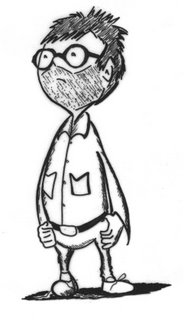
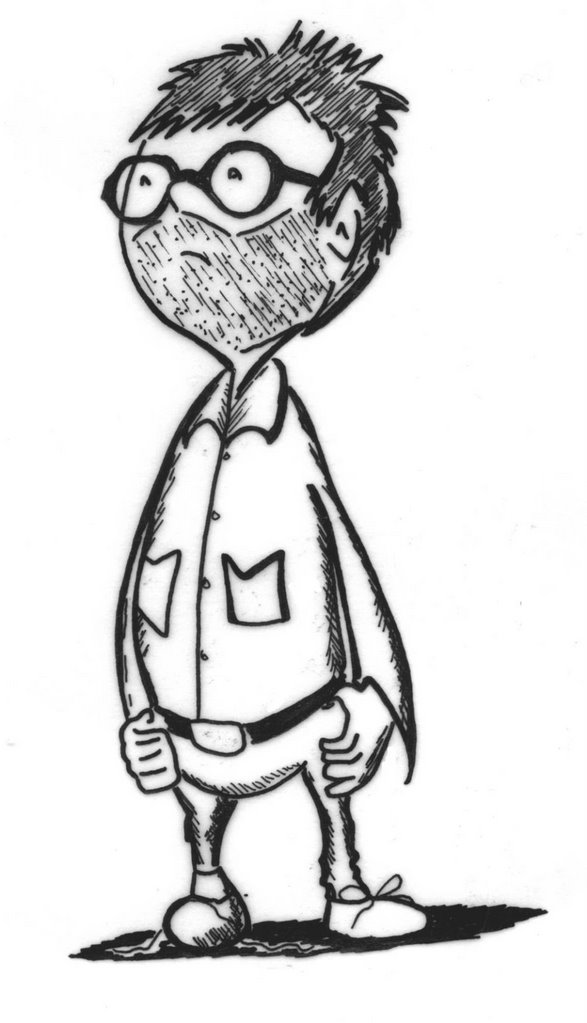
Nearly four years back, I found this picture of a lost researcher, busy with his research,
unconcerned with the goings on around him, perhaps slightly lamentable. But on the
whole, I also found it the cutest feature of his. Over the last few years, with my coming to
know this chap better and better, I have learned to look at him in a very different light,
particularly, with reference to IISc. That lost look could also signify a callous creature
who remains doped in his own imaginary world, and has deliberately decided to keep his
eyes closed to many things around him, which need his attention. And the most
deplorable of all facts is that I myself am partly that lost researcher.
Remember Matrix? People living in a illusory world, while in reality, they are no more
than instruments, power sources. The real world is very different from what they think it
is. It depends on them, but not in the colourful ways that they think it does, but, in a very
wicked, cold, ruthless way.
Look around. Your lab, right? An altar of knowledge, a pathway to a world of scientific
glory. Is it the real world? Or merely a cocoon woven around us. Does it protect us from
something; or protects something else from us?
Most of us are blissfully unaware that a mammoth system exists and functions around
these tiny oases of our labs. The administrative system: the estate office, hostel office,
messes, finance section, student section, library, CSIC, not to mention the departmental
offices. I don't know where this list ends. All I know is that these are fat, populous units,
cumulatively far bigger than the student population. And shock of all shocks : they are
more powerful and more important than the student community. We might like to think
that they exist to facilitate the core activity of the institute – research. Quite contrary to
that, that's just a small fraction of what they might be involved in. A significant portion of
their existence is perhaps dedicated to itself.
A number of issues regularly appear like insignificant itches on the skin of the IISc
community, and tragically fail to infect us pachyderms. Things – I don't know who is
responsible for – but which we should be concerned about, because they concern us. Let
me pick some of them at random, which have bothered me rather seriously at some point
in time, but which I just forgot in time, without seeking out their answers:
· Why does food get over so early before the mess closing time in A-mess, always, year
after year?
· What happened to those 100 and odd sandal wood trees that were cut down some time
back. The outrage it caused seemed to be sufficient to warrant a detailed explanation,
didn't it?
· In the new hostel blocks, the method for preventing inmates from wasting hot water
was to simply remove the shower knobs. Is that the way PG students should be treated
in their daily lives?
· JN Tata Auditorium used to be regularly lent out to students for their cultural and
other activities. Now, it's awfully hard, if not impossible, for students to use it for their
purposes. The explanation: holding cultural programmes causes wear and tear to the
auditorium. There was a story being told that a huge sum of money was sanctioned a
couple of years ago for a complete renovation of SAC, or for building a new
auditorium for holding student functions. SAC's name has been changed alright. It's
difficult to estimate how much expenditure that would have caused. Where did all that
money go? Did it ever come?
· The IISc Music team Rhythmica, which has created unparalleled popularity for itself
in the last four and half years, is forced to perform in the cramped Satish Dhawan
auditorium every time. Every performance, the auditorium gets horrendously
overcrowded, and hundreds just return because of not even being able to gain entry, let
alone getting a seat. To top this, Rhythmica was refused permission to hire sound
system from outside for reasons never made clear. The sound system in SD auditorium
is of a seminar quality, not appropriate for playing music. The alternatives that have
been provided to Rhythmica has been an advice to perform in the Gymkhana Hall or
SAC, both of which have terrible acoustics. Why is it possible for anybody to treat the
team which has proved the most successful team effort ever to have happened in the
campus, like this? With a constant membership of nearly 40 highly talented artists,
many of whom have done exceptionally well in their research, with now nearly 25
highly successful performances to its credit, doesn't this team deserve to be treated
better, and provided more encouraging ambiance to function?
· There are many cases of students being refused their scholarships because they failed
to fill their scholarship forms in time. Explanation: Money has gone back to MHRD
and nothing can be done about it.
· The current thing about which everybody is talking in a disgruntled tone is the
collection of TV cable connections fees. Onus has been thrown upon the students to
collect money from their block inmates and pay up the cable connection rents. Due to
unsynchronised lifestyles of inmates, hostel representatives find it an uphill task to get
all money collected. Why do we have to pay extra for something like cable
connection? And even if we have to, why isn't there a process to deduct the money
from source along with the hostel fees? Explanation: cable connection is a luxury item.
In 2006, cable connection is considered a luxury in the residential hostels of the most
famous research institute of South Asia! We are indeed living in a third world country.
With the above small list of questions, which doesn't even represent the smallest fraction
of all questions of this nature that can be asked, I might already have ruffled up many
feathers by now. Before a big man (in some administrative position) decides to call me
and reprimand me on being so irresponsibly vocal in a public forum, let me provide this
simple disclaimer: I am not blaming anyone. Nor am I raising issues.
If there's anyone I am directly pointing fingers to, it's the students who never seem to
wonder what's going on around them. Being a student, I know well enough that thousands
and thousands of such questions are swarming in the heart of each of us. But I am
concerned that researchers who swear by their curious nature, don't even stop by such
questions which are screaming out at them on every pathway of their life. I am
disconcerted about the authenticity of the so called 'spirit of research' which concerns
itself only with esoteric theoretical questions which, at best, a group of white-collars will
briefly talk about in a conference taking place across the oceans; when such mundane –
but authentic – questions abound our everyday life.
There have been several instances where questioning students have been sent back by
various authorities – both academic and administrative – clearly indicating that
authorities don't consider themselves answerable to students beyond a point. How has it
come to this pass that anybody dares tell that to a student?
A massive administrative body, by its very nature, is power hungry. That's not bad in
itself. An ideal situation is when the powers are so evenly balanced that the distinction
between the authority and the subject vanishes. It's a delicate balance like those existing
in an ecosystem. Its presence results in symbiosis; its absence, in parasitism. The ill is not
in the authorities not deeming it important to answer our questions. The ill starts when
we, the subjects, deem it unimportant to ask questions; when we tire of keeping asking
until we are given satisfactory answers.
This disinterest to be aware of one's own environment is the ideal breeding ground for
corruption. Authorities who hog power aren't necessarily corrupt. But, large number of
parasites find their home under their auspices. Their interest is in keeping the subjects
divided and helpless; and in keeping the actual authorities sequestered and alienated from
the subjects, lest both come to identify the real symbiotic nature of their relation.
I don't know if such parasites are already thriving in our campus (OK, I am lying). But if
they do, then we have already lost our first line of defense to them. In IISc, there seems to
be no adherence to the practice of raising questions, and answering them transparently. In
this regard, IISc can't be likened to the general populace of the country. Resources are far
more, population is far less, and its citizens are infinitely more capable of handling
information. Keeping them in dark in such numerous issues can have no possible logical
explanation. Suppressing questions by humiliation and threats or by stern refusal to
answer them seems so out of place in IISc; but it's happening everyday here. That it
already has become the practice is a clear indicator of a social pestilence of corruption
having found its way into the veins of this allegedly elite campus.
Two appeals: One is to people sitting at positions of power that if they find themselves
organisedly separated from the students whose needs it's the prime need of their
departments to cater to, they can be sure that someone wants them to remain that way.
Why not pat a student who – like a good researcher – asks a good question? And try
answering it yourself? Chuck the red-tape!
My second appeal is again to the students. Let's come out of our self-image of the lost
researcher. If we are not in a position of grooming ourselves into an aware and smart
citizen well-connected to his environment, we can hardly hope to achieve anything
meaningful for our country and this society.
And I have no appeal and nothing to say to people who, either due to their vested interest
or ignorance, believe that no question needs be raised or answered.
unconcerned with the goings on around him, perhaps slightly lamentable. But on the
whole, I also found it the cutest feature of his. Over the last few years, with my coming to
know this chap better and better, I have learned to look at him in a very different light,
particularly, with reference to IISc. That lost look could also signify a callous creature
who remains doped in his own imaginary world, and has deliberately decided to keep his
eyes closed to many things around him, which need his attention. And the most
deplorable of all facts is that I myself am partly that lost researcher.
Remember Matrix? People living in a illusory world, while in reality, they are no more
than instruments, power sources. The real world is very different from what they think it
is. It depends on them, but not in the colourful ways that they think it does, but, in a very
wicked, cold, ruthless way.
Look around. Your lab, right? An altar of knowledge, a pathway to a world of scientific
glory. Is it the real world? Or merely a cocoon woven around us. Does it protect us from
something; or protects something else from us?
Most of us are blissfully unaware that a mammoth system exists and functions around
these tiny oases of our labs. The administrative system: the estate office, hostel office,
messes, finance section, student section, library, CSIC, not to mention the departmental
offices. I don't know where this list ends. All I know is that these are fat, populous units,
cumulatively far bigger than the student population. And shock of all shocks : they are
more powerful and more important than the student community. We might like to think
that they exist to facilitate the core activity of the institute – research. Quite contrary to
that, that's just a small fraction of what they might be involved in. A significant portion of
their existence is perhaps dedicated to itself.
A number of issues regularly appear like insignificant itches on the skin of the IISc
community, and tragically fail to infect us pachyderms. Things – I don't know who is
responsible for – but which we should be concerned about, because they concern us. Let
me pick some of them at random, which have bothered me rather seriously at some point
in time, but which I just forgot in time, without seeking out their answers:
· Why does food get over so early before the mess closing time in A-mess, always, year
after year?
· What happened to those 100 and odd sandal wood trees that were cut down some time
back. The outrage it caused seemed to be sufficient to warrant a detailed explanation,
didn't it?
· In the new hostel blocks, the method for preventing inmates from wasting hot water
was to simply remove the shower knobs. Is that the way PG students should be treated
in their daily lives?
· JN Tata Auditorium used to be regularly lent out to students for their cultural and
other activities. Now, it's awfully hard, if not impossible, for students to use it for their
purposes. The explanation: holding cultural programmes causes wear and tear to the
auditorium. There was a story being told that a huge sum of money was sanctioned a
couple of years ago for a complete renovation of SAC, or for building a new
auditorium for holding student functions. SAC's name has been changed alright. It's
difficult to estimate how much expenditure that would have caused. Where did all that
money go? Did it ever come?
· The IISc Music team Rhythmica, which has created unparalleled popularity for itself
in the last four and half years, is forced to perform in the cramped Satish Dhawan
auditorium every time. Every performance, the auditorium gets horrendously
overcrowded, and hundreds just return because of not even being able to gain entry, let
alone getting a seat. To top this, Rhythmica was refused permission to hire sound
system from outside for reasons never made clear. The sound system in SD auditorium
is of a seminar quality, not appropriate for playing music. The alternatives that have
been provided to Rhythmica has been an advice to perform in the Gymkhana Hall or
SAC, both of which have terrible acoustics. Why is it possible for anybody to treat the
team which has proved the most successful team effort ever to have happened in the
campus, like this? With a constant membership of nearly 40 highly talented artists,
many of whom have done exceptionally well in their research, with now nearly 25
highly successful performances to its credit, doesn't this team deserve to be treated
better, and provided more encouraging ambiance to function?
· There are many cases of students being refused their scholarships because they failed
to fill their scholarship forms in time. Explanation: Money has gone back to MHRD
and nothing can be done about it.
· The current thing about which everybody is talking in a disgruntled tone is the
collection of TV cable connections fees. Onus has been thrown upon the students to
collect money from their block inmates and pay up the cable connection rents. Due to
unsynchronised lifestyles of inmates, hostel representatives find it an uphill task to get
all money collected. Why do we have to pay extra for something like cable
connection? And even if we have to, why isn't there a process to deduct the money
from source along with the hostel fees? Explanation: cable connection is a luxury item.
In 2006, cable connection is considered a luxury in the residential hostels of the most
famous research institute of South Asia! We are indeed living in a third world country.
With the above small list of questions, which doesn't even represent the smallest fraction
of all questions of this nature that can be asked, I might already have ruffled up many
feathers by now. Before a big man (in some administrative position) decides to call me
and reprimand me on being so irresponsibly vocal in a public forum, let me provide this
simple disclaimer: I am not blaming anyone. Nor am I raising issues.
If there's anyone I am directly pointing fingers to, it's the students who never seem to
wonder what's going on around them. Being a student, I know well enough that thousands
and thousands of such questions are swarming in the heart of each of us. But I am
concerned that researchers who swear by their curious nature, don't even stop by such
questions which are screaming out at them on every pathway of their life. I am
disconcerted about the authenticity of the so called 'spirit of research' which concerns
itself only with esoteric theoretical questions which, at best, a group of white-collars will
briefly talk about in a conference taking place across the oceans; when such mundane –
but authentic – questions abound our everyday life.
There have been several instances where questioning students have been sent back by
various authorities – both academic and administrative – clearly indicating that
authorities don't consider themselves answerable to students beyond a point. How has it
come to this pass that anybody dares tell that to a student?
A massive administrative body, by its very nature, is power hungry. That's not bad in
itself. An ideal situation is when the powers are so evenly balanced that the distinction
between the authority and the subject vanishes. It's a delicate balance like those existing
in an ecosystem. Its presence results in symbiosis; its absence, in parasitism. The ill is not
in the authorities not deeming it important to answer our questions. The ill starts when
we, the subjects, deem it unimportant to ask questions; when we tire of keeping asking
until we are given satisfactory answers.
This disinterest to be aware of one's own environment is the ideal breeding ground for
corruption. Authorities who hog power aren't necessarily corrupt. But, large number of
parasites find their home under their auspices. Their interest is in keeping the subjects
divided and helpless; and in keeping the actual authorities sequestered and alienated from
the subjects, lest both come to identify the real symbiotic nature of their relation.
I don't know if such parasites are already thriving in our campus (OK, I am lying). But if
they do, then we have already lost our first line of defense to them. In IISc, there seems to
be no adherence to the practice of raising questions, and answering them transparently. In
this regard, IISc can't be likened to the general populace of the country. Resources are far
more, population is far less, and its citizens are infinitely more capable of handling
information. Keeping them in dark in such numerous issues can have no possible logical
explanation. Suppressing questions by humiliation and threats or by stern refusal to
answer them seems so out of place in IISc; but it's happening everyday here. That it
already has become the practice is a clear indicator of a social pestilence of corruption
having found its way into the veins of this allegedly elite campus.
Two appeals: One is to people sitting at positions of power that if they find themselves
organisedly separated from the students whose needs it's the prime need of their
departments to cater to, they can be sure that someone wants them to remain that way.
Why not pat a student who – like a good researcher – asks a good question? And try
answering it yourself? Chuck the red-tape!
My second appeal is again to the students. Let's come out of our self-image of the lost
researcher. If we are not in a position of grooming ourselves into an aware and smart
citizen well-connected to his environment, we can hardly hope to achieve anything
meaningful for our country and this society.
And I have no appeal and nothing to say to people who, either due to their vested interest
or ignorance, believe that no question needs be raised or answered.
Tuesday, December 19, 2006
Calling a 'spade' a 'spade'
Quoting from one of my recent mails to a friend of mine:
there's never ever a 'spade' alone. Calling it a spade is a truth, but it's a partial one. It would be a fallacy to presume that truth can even be comprehended with our finite intellects, leave alone it's being expressed in our meagre vocabulary. I am no scholar, but I appreciate what a limited and dangerous blessing God has given us -- language. I understand that while it can communicate a lot less than what's there in our mind, it also carries with it a lot more than we are aware of -- presumptions, preoccupations, prejudices -- things which steal their way out of our minds through our speech while we intended to say something entirely different.
there's never ever a 'spade' alone. Calling it a spade is a truth, but it's a partial one. It would be a fallacy to presume that truth can even be comprehended with our finite intellects, leave alone it's being expressed in our meagre vocabulary. I am no scholar, but I appreciate what a limited and dangerous blessing God has given us -- language. I understand that while it can communicate a lot less than what's there in our mind, it also carries with it a lot more than we are aware of -- presumptions, preoccupations, prejudices -- things which steal their way out of our minds through our speech while we intended to say something entirely different.
Thursday, November 30, 2006
Three Connecting Threads
I am an unbeliever. An agnostic. Perhaps.
And yet, like all creatures, I have the craving to see a wholeness -- a bigger picture, in cliched terms -- of everything. A reason why, I often wish there had been some mystical powers. I have no good reason to believe that there indeed are any such powers. But, I do seem to have seen the presence of divinity in very earthly things, events and pursuits. Things which are divine enough in themselves, but to a willing heart, they might be connecting threads to a much bigger, much more divine, entity. Here's a list of three.
Curiosity
I had once written two other blogs (Mystery and Curiosity and Addendum on Curiosity) on this. To repeat, curiosity makes the process of learning inherently meaningful. I am not in a position to comprehend what lies behind the instinct of curiosity. But nothing can or should lie between a curious mind and learning.
Appreciation of Beauty
I strongly feel that there's a chance that our abilities of experiencing joy through our senses might be a signal from a world beyond. The level to which we are capable of getting attracted to beauty defies biological or evolutionary explanation. Both the number of sources of sensical joy (food, sight, music, sex, sleep, ...), and extent to which we can experience joy through them both are simply astounding. And how our abilities to notice and savour beauty grows boundlessly with practice. Be it in music (beauty in sound), or spirituality (beauty of everything). Seems rather probable that a heightened state of refinement will release all the beauty hidden in everything. Perhaps, in that state we can be in a state of perpetual orgasm flooded with infinite joy from all the senses! Perhaps, that's what they call Nirvana. Perhaps, it's just a theoretical extrapolation of reality. Nonetheless, an attractive goal to pursue.
Love
The magic of identifying oneself with things, people, concepts, places, ideas...has surely a lame biological explanation. But, looked really scientifically, it stands on its own as one of the strangest natural miracles. It gives a very clear indication that the boundary of the 'self' doesn't coincide with our body. It keeps growing (with love), shrinking (with hatred and selfishness). Sometimes, a hurt happening to someone -- however near or far, something -- however real or abstract, is more unacceptable than even the loss of life. Evolutionary explanations apart, I feel the process of loving anything is intertwined closely with the expansion and contraction of the field called 'self'. What happens when this love grows so big that the field covers everybody, everything? I am sure, this is that extrapolation of the experience of the earthly love we feel. Becoming one with everyone and everything. The yoga with the Bigger Soul. Again theoretical, but damn attractive as a concept.
An enlightened person may look at them as the manifestation of the same thing perhaps. I don't know. I am surely biased with the little bit of introductory reading I have done of Indian scriptures, and by my pardonable inclination in seeing them proving true. I am therefore open not to be believed. Please don't give the above any more importance than deserved by musings of an idle mind. They are mere thoughts, not visions. I am sure, spiritual visions are beyond mind (again I am speaking the same language).
But aren't these interesting, even as thoughts? :)
Related Blogs:
Mystery and Curiosity
Addendum on Curiosity
Creativity -- the Basic Instinct
Justifiability of Kindness
And yet, like all creatures, I have the craving to see a wholeness -- a bigger picture, in cliched terms -- of everything. A reason why, I often wish there had been some mystical powers. I have no good reason to believe that there indeed are any such powers. But, I do seem to have seen the presence of divinity in very earthly things, events and pursuits. Things which are divine enough in themselves, but to a willing heart, they might be connecting threads to a much bigger, much more divine, entity. Here's a list of three.
Curiosity
I had once written two other blogs (Mystery and Curiosity and Addendum on Curiosity) on this. To repeat, curiosity makes the process of learning inherently meaningful. I am not in a position to comprehend what lies behind the instinct of curiosity. But nothing can or should lie between a curious mind and learning.
Appreciation of Beauty
I strongly feel that there's a chance that our abilities of experiencing joy through our senses might be a signal from a world beyond. The level to which we are capable of getting attracted to beauty defies biological or evolutionary explanation. Both the number of sources of sensical joy (food, sight, music, sex, sleep, ...), and extent to which we can experience joy through them both are simply astounding. And how our abilities to notice and savour beauty grows boundlessly with practice. Be it in music (beauty in sound), or spirituality (beauty of everything). Seems rather probable that a heightened state of refinement will release all the beauty hidden in everything. Perhaps, in that state we can be in a state of perpetual orgasm flooded with infinite joy from all the senses! Perhaps, that's what they call Nirvana. Perhaps, it's just a theoretical extrapolation of reality. Nonetheless, an attractive goal to pursue.
Love
The magic of identifying oneself with things, people, concepts, places, ideas...has surely a lame biological explanation. But, looked really scientifically, it stands on its own as one of the strangest natural miracles. It gives a very clear indication that the boundary of the 'self' doesn't coincide with our body. It keeps growing (with love), shrinking (with hatred and selfishness). Sometimes, a hurt happening to someone -- however near or far, something -- however real or abstract, is more unacceptable than even the loss of life. Evolutionary explanations apart, I feel the process of loving anything is intertwined closely with the expansion and contraction of the field called 'self'. What happens when this love grows so big that the field covers everybody, everything? I am sure, this is that extrapolation of the experience of the earthly love we feel. Becoming one with everyone and everything. The yoga with the Bigger Soul. Again theoretical, but damn attractive as a concept.
An enlightened person may look at them as the manifestation of the same thing perhaps. I don't know. I am surely biased with the little bit of introductory reading I have done of Indian scriptures, and by my pardonable inclination in seeing them proving true. I am therefore open not to be believed. Please don't give the above any more importance than deserved by musings of an idle mind. They are mere thoughts, not visions. I am sure, spiritual visions are beyond mind (again I am speaking the same language).
But aren't these interesting, even as thoughts? :)
Related Blogs:
Mystery and Curiosity
Addendum on Curiosity
Creativity -- the Basic Instinct
Justifiability of Kindness
Monday, November 20, 2006
Empathy
Please don't tell them 'there's nothing to suffer.' You know, often some of us are blessed with extra wisdom that helps us look beyond negativities, and makes pain non-existent for us. Some of us are often not so blessed. The wise ones shouldn't give a feeling that the pain the others feel is pointless. That might make some feel stupid over and above the pain. Wisdom is also like a material property. Some have it, some don't. The product of material wealth is comfort and luxury. The product of wisdom is joy and happiness. We should be humble in enjoying (and displaying) the fruits of our blessings.
Empathy is the word.
I know, I don't need to say anything more. You would surely know what I mean. :)
Empathy is the word.
I know, I don't need to say anything more. You would surely know what I mean. :)
Friday, November 10, 2006
Good People, Good Experiences
I met some exceptionally nice people in all places. Here are some of them.
1. On October 28, when I came out of the Hongkong airport with intentions of meeting Shashank, and with some basic direction as to how to find my way to his place, I immediately realised that things weren't going to be so easy to reach to his place. I was supposed to catch a bus to a particular station. Thereafter, I was supposed to catch a train to the City Centre. From there, I was supposed to change train to reach the place close to Shashank's place. Quite a handful of complications for a newcomer to a place.
I met a lady -- quite cute -- , most probably an employee at the airport waiting for her bus at the nearby bus stop. I asked her how I could get to the MTR station. She expressed her ignorance and said that she would find out. Soon, there was a bus coming. She had a longish chat in Chinese with the bus driver. Finally, it was decided that this was the bus I was supposed to board. Immediately on getting into the bus, I started fumbling. There was no conductor as one would find in Indian buses. Instead, there was this machine which was printing out tickets for the passengers. I didn't have the required coins. I couldn't initially understand what the driver was saying even if he was saying something to me. In that moment of confusion, the lady I had just talked to re entered the bus, swiped her card at the printing machine, and disappeared into the street. The ticket for me got printed . The bus moved on. I couldn't even thank her for her favour. Later I observed that the ticket was worth 3.75 Hongkong Dollars.
Another good experience that stands out was when I was about to leave Auckland on my way back. The flight was at 12 midnight. The airport was quite far from where I was staying. I had travelled all over Auckland that day; and that had given me a bit of an overconfidence that I could get anywhere just by hopping into a bus. However, what I had failed to take note of was that the buses stopped plying on Sundays at 9 PM. By the time I finished my packing and reached the bus stop, I think might have just missed the last bus. I waited for about half an hour and started getting fidgety. I walked back to my hotel and started scurrying through the yellow pages looking for taxi agencies. I called up some numbers (which I could do only because one of the inmates in the hotel lent me her calling card, another instance of a good person). All of them were either unavailable or said that they would take at least an hour to touch me. Time to get really really nervous!
I simply came out into the deserted road and started walking towards the main road. Then I met this gentleman whom I simply caught and explained my problem. He said he was coming from the airport, and it was indeed quite late (over 10 PM) to catch a midnight flight. He then actually walked with me for nearly a kilometre, caught me a taxi, tucked me and my luggage into it and sent me off to airport. Again, I couldn't finish thanking the good gentleman before the taxi had sped ahead away from him.
The taxi driver happened to be Mr. Dhillon from Punjab. A smart young chap speaking nice English with foriegn accent. He soon found out that I was travelling to India. Then started a torrent of storytelling a pure rustic form of Hindi, foul language affectionately garnishing his descriptions. Among others, he gave a long lecture as to how easy it is to lay white girls. He was almost cursing me when he came to know that I had refused an offer of a drink from a beautiful french girl. It seems, he considered that as a straightforward expression of interest, and more advanced forms of socialising would soon follow. The other major chunk of his discourse was the revelation of his frustrations and of that of others in his position, who had left their country (India) attracted by the glitz and glamour, and found themselves trapped in it. In short, India wins hands-down as a place for settling down.
Mr. Dhillon continued his Indian mannerism when it came to settling the bill. 'Apko jitna thik lage de do saab.' He said. I took out fifty dollars, since that was the bill. He took only forty, shook hands, gave his card, assured me that he was in my service next time I visited Auckland, and went off.
Mr. Dhillon wasn't a particularly nice chap if looked at neutrally. But I couldn't have hoped for a nicer escort to the airport in that late hour in a foriegn land.
1. On October 28, when I came out of the Hongkong airport with intentions of meeting Shashank, and with some basic direction as to how to find my way to his place, I immediately realised that things weren't going to be so easy to reach to his place. I was supposed to catch a bus to a particular station. Thereafter, I was supposed to catch a train to the City Centre. From there, I was supposed to change train to reach the place close to Shashank's place. Quite a handful of complications for a newcomer to a place.
I met a lady -- quite cute -- , most probably an employee at the airport waiting for her bus at the nearby bus stop. I asked her how I could get to the MTR station. She expressed her ignorance and said that she would find out. Soon, there was a bus coming. She had a longish chat in Chinese with the bus driver. Finally, it was decided that this was the bus I was supposed to board. Immediately on getting into the bus, I started fumbling. There was no conductor as one would find in Indian buses. Instead, there was this machine which was printing out tickets for the passengers. I didn't have the required coins. I couldn't initially understand what the driver was saying even if he was saying something to me. In that moment of confusion, the lady I had just talked to re entered the bus, swiped her card at the printing machine, and disappeared into the street. The ticket for me got printed . The bus moved on. I couldn't even thank her for her favour. Later I observed that the ticket was worth 3.75 Hongkong Dollars.
Another good experience that stands out was when I was about to leave Auckland on my way back. The flight was at 12 midnight. The airport was quite far from where I was staying. I had travelled all over Auckland that day; and that had given me a bit of an overconfidence that I could get anywhere just by hopping into a bus. However, what I had failed to take note of was that the buses stopped plying on Sundays at 9 PM. By the time I finished my packing and reached the bus stop, I think might have just missed the last bus. I waited for about half an hour and started getting fidgety. I walked back to my hotel and started scurrying through the yellow pages looking for taxi agencies. I called up some numbers (which I could do only because one of the inmates in the hotel lent me her calling card, another instance of a good person). All of them were either unavailable or said that they would take at least an hour to touch me. Time to get really really nervous!
I simply came out into the deserted road and started walking towards the main road. Then I met this gentleman whom I simply caught and explained my problem. He said he was coming from the airport, and it was indeed quite late (over 10 PM) to catch a midnight flight. He then actually walked with me for nearly a kilometre, caught me a taxi, tucked me and my luggage into it and sent me off to airport. Again, I couldn't finish thanking the good gentleman before the taxi had sped ahead away from him.
The taxi driver happened to be Mr. Dhillon from Punjab. A smart young chap speaking nice English with foriegn accent. He soon found out that I was travelling to India. Then started a torrent of storytelling a pure rustic form of Hindi, foul language affectionately garnishing his descriptions. Among others, he gave a long lecture as to how easy it is to lay white girls. He was almost cursing me when he came to know that I had refused an offer of a drink from a beautiful french girl. It seems, he considered that as a straightforward expression of interest, and more advanced forms of socialising would soon follow. The other major chunk of his discourse was the revelation of his frustrations and of that of others in his position, who had left their country (India) attracted by the glitz and glamour, and found themselves trapped in it. In short, India wins hands-down as a place for settling down.
Mr. Dhillon continued his Indian mannerism when it came to settling the bill. 'Apko jitna thik lage de do saab.' He said. I took out fifty dollars, since that was the bill. He took only forty, shook hands, gave his card, assured me that he was in my service next time I visited Auckland, and went off.
Mr. Dhillon wasn't a particularly nice chap if looked at neutrally. But I couldn't have hoped for a nicer escort to the airport in that late hour in a foriegn land.
Wednesday, November 01, 2006
Blogs from French Polynesia
Guess, this is not a place to document a travelogue. But I don't want to create another blog for that. And after all, no travelogue is ever written without its own of bit of philosophy.
So here it goes...
So here it goes...
Friday, September 29, 2006
When I Die...
I will try hard to protect this blog from becoming one of those mushy-mushy philosophical blogs; and will try a bit not to sound gloomy either. Believe me, it's a very matter of factly, philosophical piece.
Thoughts about death often come to me when I go to bed everyday. As I put my head on the pillow, I think of death as going to sleep. And then, I often start enumerating the circumstances that could possibly surround my death, whenever it happens.
I rarely suffer from sleeplessness, thank Goodness. But when I do, it's mostly due to a raging emotion -- of unvented hatred, jealousy, unrequitted love, feelings of guilt, apprehensions of future...such negative thoughts. While there goes on a storm in my mind, I am totally aware of the fruitlessness of this wakefulness. I wish I had got some sleep, but it wouldn't come then.
Sometimes, the sleep doesn't come due to my gluttony. A heavy dinner with a perfect knowledge of the consequences. A heavy tummy, this time the storm happening there instead of in the head. And tossing around in the bed. Awful!
And then there are days that had some particularly good experience: a rare pat from the guide, an appreciative remark from a colleague or friend. A lusty look from an attractive girl (may be imagined!), a show of affection from a girl for whom, may be, I nurture a tiny little soft corner in my heart, mom calling up and saying she dreamed about me and was worried, a piece of code running perfectly, a theorem getting proved, an idea striking. A cartoon coming out the very way I had visualised it in my mind before making it. All these cause me to intentionally ward off the sleep for few moments more, just so that I could gloat a little longer about that nice experience.
Once in a while, there are these torturous nights when the thought of something I badly crave to do, but don't know how to, keep me waking for hours. Research, for the most number of times, and drawing is another. The few hours of deep slumber in the wee hours would be preceded and often followed by a painful half-wakeful state flashing images of unimplemented modules of an implementation, intuitive but unproved research propositions, beautiful paintings not made by me. Though, I would finally pass into a sleep giving up all hopes of making all those hallucinations a reality onto the next day, I would usually wake up too groggy and bleary eyed to be able to do anything useful.
On the other hand, there are these nights which follow a particularly productive day, when I come back with some more work to do, planning that I will finish the thinking work in the minutes that precede the sleep. Often that happens; often it gets aborted by the body and mind giving up to an overwhelming exhaustion.
But sweetest are those nights when I come back after an honest day's work, all tired and broken. No! Neiter necessarily having seen great successes that day, nor any tantalising look of desire for me in some beautiful eyes. It's just a day when I spent all my energy in doing something well-meaning and happy. Irrespective of how it fits into the grand design of my life; irrespective of how it adds value to the society. That would be a night with a complete realisation that all energy is now spent, everything has been done. And each drop of it was spent relishing an honest -- perhaps very modest -- act of fulfilment. A small program. A proof. A beautiful letter or blog. A nice sketch. A long chat with a bosom friend. The joy that I feel at that moment comes not from the value or meaningfulness of the experience. But from my honest, unbriddled involvement in it. I have no desire to experience it once more; nor any plans for the next day. Just plain, sweet exhaustion! I just make my bed, curl up under the bedsheet with a sweet smile of satisfaction and fulfilment, and am asleep even before that smile has gone.
I often wonder, how I would die.
Will death come after playing hide and seek with me, momentarily preventing me from departing from a body and mind filled with agony of hatred, jealousy and strife?
Or will it come after letting me writhe a few moments more in agony and remorse for having abused my body and mind with poisonous substances and thoughts.
Or will it approach me ambivalently while I hallucinate about what I could've, but didn't, do or achieve?
Or will it abort a joyous experience with its long expected arrival when I would just have had a glimpse of a long elusive achievement?
Or will it come suddenly one day even as I would be planning my next move?
Or -- oh how I wish it were this way! -- she would one day just take my broken body into her folds, after having allowed me to lead a life of humble fulfilment, when I know I have lived it enough and want no more of it; when I am at ease with whatever little love, wealth, health and fame I have earned; when I am at ease with myself, my littleness, my insignificance. When I am satisfied, not perhaps about what the life gave me, but certainly about how I dealt with her.
That's how I would wish to die one day! :)
Thoughts about death often come to me when I go to bed everyday. As I put my head on the pillow, I think of death as going to sleep. And then, I often start enumerating the circumstances that could possibly surround my death, whenever it happens.
I rarely suffer from sleeplessness, thank Goodness. But when I do, it's mostly due to a raging emotion -- of unvented hatred, jealousy, unrequitted love, feelings of guilt, apprehensions of future...such negative thoughts. While there goes on a storm in my mind, I am totally aware of the fruitlessness of this wakefulness. I wish I had got some sleep, but it wouldn't come then.
Sometimes, the sleep doesn't come due to my gluttony. A heavy dinner with a perfect knowledge of the consequences. A heavy tummy, this time the storm happening there instead of in the head. And tossing around in the bed. Awful!
And then there are days that had some particularly good experience: a rare pat from the guide, an appreciative remark from a colleague or friend. A lusty look from an attractive girl (may be imagined!), a show of affection from a girl for whom, may be, I nurture a tiny little soft corner in my heart, mom calling up and saying she dreamed about me and was worried, a piece of code running perfectly, a theorem getting proved, an idea striking. A cartoon coming out the very way I had visualised it in my mind before making it. All these cause me to intentionally ward off the sleep for few moments more, just so that I could gloat a little longer about that nice experience.
Once in a while, there are these torturous nights when the thought of something I badly crave to do, but don't know how to, keep me waking for hours. Research, for the most number of times, and drawing is another. The few hours of deep slumber in the wee hours would be preceded and often followed by a painful half-wakeful state flashing images of unimplemented modules of an implementation, intuitive but unproved research propositions, beautiful paintings not made by me. Though, I would finally pass into a sleep giving up all hopes of making all those hallucinations a reality onto the next day, I would usually wake up too groggy and bleary eyed to be able to do anything useful.
On the other hand, there are these nights which follow a particularly productive day, when I come back with some more work to do, planning that I will finish the thinking work in the minutes that precede the sleep. Often that happens; often it gets aborted by the body and mind giving up to an overwhelming exhaustion.
But sweetest are those nights when I come back after an honest day's work, all tired and broken. No! Neiter necessarily having seen great successes that day, nor any tantalising look of desire for me in some beautiful eyes. It's just a day when I spent all my energy in doing something well-meaning and happy. Irrespective of how it fits into the grand design of my life; irrespective of how it adds value to the society. That would be a night with a complete realisation that all energy is now spent, everything has been done. And each drop of it was spent relishing an honest -- perhaps very modest -- act of fulfilment. A small program. A proof. A beautiful letter or blog. A nice sketch. A long chat with a bosom friend. The joy that I feel at that moment comes not from the value or meaningfulness of the experience. But from my honest, unbriddled involvement in it. I have no desire to experience it once more; nor any plans for the next day. Just plain, sweet exhaustion! I just make my bed, curl up under the bedsheet with a sweet smile of satisfaction and fulfilment, and am asleep even before that smile has gone.
I often wonder, how I would die.
Will death come after playing hide and seek with me, momentarily preventing me from departing from a body and mind filled with agony of hatred, jealousy and strife?
Or will it come after letting me writhe a few moments more in agony and remorse for having abused my body and mind with poisonous substances and thoughts.
Or will it approach me ambivalently while I hallucinate about what I could've, but didn't, do or achieve?
Or will it abort a joyous experience with its long expected arrival when I would just have had a glimpse of a long elusive achievement?
Or will it come suddenly one day even as I would be planning my next move?
Or -- oh how I wish it were this way! -- she would one day just take my broken body into her folds, after having allowed me to lead a life of humble fulfilment, when I know I have lived it enough and want no more of it; when I am at ease with whatever little love, wealth, health and fame I have earned; when I am at ease with myself, my littleness, my insignificance. When I am satisfied, not perhaps about what the life gave me, but certainly about how I dealt with her.
That's how I would wish to die one day! :)
Tuesday, September 19, 2006
Selfishness Inside Out
There's a subtle difference between true selflessness and selfishness worn inside out.
There are lots of people who wear their selfishness inside out. I will give examples of two such varieties. That'll clarify.
One. Over nice people. People who always are eager to pay all bills, carry all loads, do all things, and give you public praises for things you haven't done. I feel these are people who subconsciously feed a deeply engrained feeling of superiority which makes them feel that charity is the best expression of love. Don't they understand that pride is one of deepest characteristics of all humans? Don't they understand that people wish to pay too, they too wish to carry their own loads, they too are noble enough to do a favour or service without truly expecting radio announcements being made about their greatness? Sometimes, I strongly see a link between this and certain forms of charity. Some people, absolutely self-centred, proud and immodest in their personal lives often indulge fiercely in activities of charity. I feel, such charity does more harm than good. An integral part of charity should be a modesty that only true love for the subject, and not mere condescending pity, can infuse in the acts of charity. I had read Tagore's novel Gora long time ago, and this very philosophy was central theme of the novel. Material charity comes from many sources. But to wash the offers of charity of the stains of false-pride requires a purity not available to many.
Two. Unharming people. People may want not to harm others for two reasons. The first kind, they truly feel others' pain and wouldn't like pain to befall anyone because it pains them as if the hurt were their own. These are authentic spiritually elevated people. They are rare. The second kind is those who don't want to be a reason for anyone's harm. The roots of this feeling lie in a deep rooted insecurity about being implicated for any crime, not in their real concern for someone's pain. These people would go out of their way to prevent themselves ever becoming the cause of someone's inconvenience. Sometimes, if you are at the other end, you will distinctly sense the extent of their inverted selfishness in that they will not appreciate that you too are capable of some good-naturedness and don't mind a bit of trouble for your friend. But they will avoid letting such situations come as if that'd give you some weapon of offense against them.
True selflessness doesn't make one more charitable. It makes one more harmonious with himself and others. Selflessness is the breaking of the walls between me, they and the whole universe. Selfishness is the drapery worn by the self to segregate it from other entities. Worn whichever way, it always accentuates the divides that our small minds have created.
This blog is an untidy vent to feelings that have arisen from recent personal experiences.
Related links:
Justifiability of Kindness
There are lots of people who wear their selfishness inside out. I will give examples of two such varieties. That'll clarify.
One. Over nice people. People who always are eager to pay all bills, carry all loads, do all things, and give you public praises for things you haven't done. I feel these are people who subconsciously feed a deeply engrained feeling of superiority which makes them feel that charity is the best expression of love. Don't they understand that pride is one of deepest characteristics of all humans? Don't they understand that people wish to pay too, they too wish to carry their own loads, they too are noble enough to do a favour or service without truly expecting radio announcements being made about their greatness? Sometimes, I strongly see a link between this and certain forms of charity. Some people, absolutely self-centred, proud and immodest in their personal lives often indulge fiercely in activities of charity. I feel, such charity does more harm than good. An integral part of charity should be a modesty that only true love for the subject, and not mere condescending pity, can infuse in the acts of charity. I had read Tagore's novel Gora long time ago, and this very philosophy was central theme of the novel. Material charity comes from many sources. But to wash the offers of charity of the stains of false-pride requires a purity not available to many.
Two. Unharming people. People may want not to harm others for two reasons. The first kind, they truly feel others' pain and wouldn't like pain to befall anyone because it pains them as if the hurt were their own. These are authentic spiritually elevated people. They are rare. The second kind is those who don't want to be a reason for anyone's harm. The roots of this feeling lie in a deep rooted insecurity about being implicated for any crime, not in their real concern for someone's pain. These people would go out of their way to prevent themselves ever becoming the cause of someone's inconvenience. Sometimes, if you are at the other end, you will distinctly sense the extent of their inverted selfishness in that they will not appreciate that you too are capable of some good-naturedness and don't mind a bit of trouble for your friend. But they will avoid letting such situations come as if that'd give you some weapon of offense against them.
True selflessness doesn't make one more charitable. It makes one more harmonious with himself and others. Selflessness is the breaking of the walls between me, they and the whole universe. Selfishness is the drapery worn by the self to segregate it from other entities. Worn whichever way, it always accentuates the divides that our small minds have created.
This blog is an untidy vent to feelings that have arisen from recent personal experiences.
Related links:
Justifiability of Kindness
Friday, September 08, 2006
These Womenfolk!
Truly, I have felt that pang of envy for the womenfolk.
Mostly it arises from my having a strong admiration for the qualities they
have. One is beauty. Let me tell you that I am talking about 'sexual
attractiveness' before I start giving some lofty impression about the word
'beauty'. I feel that it's very easy for a woman to attract a man, and
destroy him completely. I have felt helpless several times in my life facing
some girl, to whom I have no reason to feel weak if one takes into
consideration the higher up qualities, but just because, somewhere deep down
I have a feeling of amour towards her physical beauty. Just because, all my amour propre has been blown to smithereens by her physical beauty.
A related feeling of envy is how proud they generally are about their body.
How they love pampering and decorating it. I remember an incident from my
childhood, when, in one of my cousins' wedding, all ladies of the house had
locked themselves up in a room and wouldn't let anybody know what they were
doing. It seems they were decking up for the function. I remember very well
how I had felt. It was envy, by all means. I couldn't stand it that they had
so much to make out of their getting ready for a function when I didn't know
anything more sophisticated to do than just putting on a new dress in the
name of preparing for a function! Later on, I came in touch with this
idea of making fun of ladies getting late due to elaborate makeup. But,
truly, I still look at their ability to do so, not with a sense of ridicule,
but with a pang of jealousy. :)
Another thing I envy them for is their natural comfort in matters of
emotions. The ease with which they can cry and let their heart out. I would
now be ready to pay in gold for each drop of tear that I would be graced
with in moments of extreme grief, when tears don't just come.
Also, the way they can just pick up a child and shower love on it. I have this strange thing that I like watching kids play at a distance. Often during this spectacle, I get this strong urge to pick them up, and pinch their chubby cheek, or make them sit on my shoulder and run around. But, more often than not, I stiffle that urge. I have this strange impression that kids are scared of my moustache! :( (Are you saying that I should get rid of that obnoxious thing?! Nonono! That won't do!) Women -- starting from a three year girl-kid to an eighty year old granny -- find it their core business to handle babies as if they were born for it (feminists, hold on! It's meant as an ode to the motherly instinct of women, and I would have been very proud to have been born with this instinct)!
Yet, I feel, the roots of all this envy lies in something good, i.e. my admiration for them! :)
Mostly it arises from my having a strong admiration for the qualities they
have. One is beauty. Let me tell you that I am talking about 'sexual
attractiveness' before I start giving some lofty impression about the word
'beauty'. I feel that it's very easy for a woman to attract a man, and
destroy him completely. I have felt helpless several times in my life facing
some girl, to whom I have no reason to feel weak if one takes into
consideration the higher up qualities, but just because, somewhere deep down
I have a feeling of amour towards her physical beauty. Just because, all my amour propre has been blown to smithereens by her physical beauty.
A related feeling of envy is how proud they generally are about their body.
How they love pampering and decorating it. I remember an incident from my
childhood, when, in one of my cousins' wedding, all ladies of the house had
locked themselves up in a room and wouldn't let anybody know what they were
doing. It seems they were decking up for the function. I remember very well
how I had felt. It was envy, by all means. I couldn't stand it that they had
so much to make out of their getting ready for a function when I didn't know
anything more sophisticated to do than just putting on a new dress in the
name of preparing for a function! Later on, I came in touch with this
idea of making fun of ladies getting late due to elaborate makeup. But,
truly, I still look at their ability to do so, not with a sense of ridicule,
but with a pang of jealousy. :)
Another thing I envy them for is their natural comfort in matters of
emotions. The ease with which they can cry and let their heart out. I would
now be ready to pay in gold for each drop of tear that I would be graced
with in moments of extreme grief, when tears don't just come.
Also, the way they can just pick up a child and shower love on it. I have this strange thing that I like watching kids play at a distance. Often during this spectacle, I get this strong urge to pick them up, and pinch their chubby cheek, or make them sit on my shoulder and run around. But, more often than not, I stiffle that urge. I have this strange impression that kids are scared of my moustache! :( (Are you saying that I should get rid of that obnoxious thing?! Nonono! That won't do!) Women -- starting from a three year girl-kid to an eighty year old granny -- find it their core business to handle babies as if they were born for it (feminists, hold on! It's meant as an ode to the motherly instinct of women, and I would have been very proud to have been born with this instinct)!
Yet, I feel, the roots of all this envy lies in something good, i.e. my admiration for them! :)
Tuesday, September 05, 2006
A Physicist Experiments With Cultural Studies
Link to the article.
The author, a physicist, uses jargon from Science to write an article he submitted to a well-regarded journal of social-studies. The self-proclaimed crap got accepted. This not only raises serious questions on the real quality of the journal, but on the seriousness with which the top social-scientists are doing their job.
I personally am very empathetic towards social-scientific, philosophical or artistic studies, and find them essential alongside rigorously scienfic studies. But their subjects are inherently susceptible to clouded thoughts, and verbosity and sophistry. Protecting authentic intellect from getting mixed with utter farce is not just difficult in their cases, it's very very important!
The author, a physicist, uses jargon from Science to write an article he submitted to a well-regarded journal of social-studies. The self-proclaimed crap got accepted. This not only raises serious questions on the real quality of the journal, but on the seriousness with which the top social-scientists are doing their job.
I personally am very empathetic towards social-scientific, philosophical or artistic studies, and find them essential alongside rigorously scienfic studies. But their subjects are inherently susceptible to clouded thoughts, and verbosity and sophistry. Protecting authentic intellect from getting mixed with utter farce is not just difficult in their cases, it's very very important!
Subscribe to:
Posts (Atom)